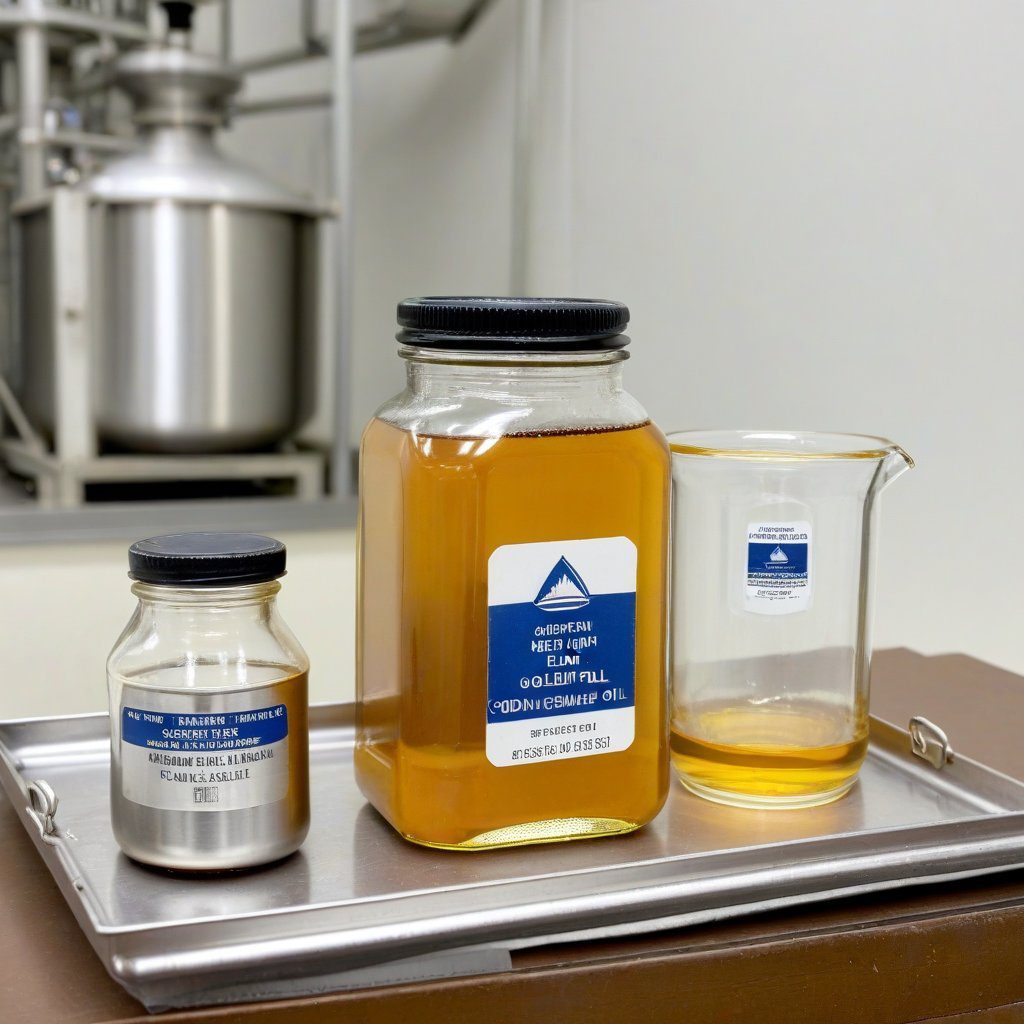
In today’s industrial landscape, securing a reliable palm kernel oil supply is more than a procurement task—it’s a strategic compliance and risk-management practice.
For companies purchasing in industrial scales, the stakes are high: quality, traceability, and regulatory alignment can determine product integrity, customer trust, and long-term profitability.
This guide presents The Ultimate Compliance Checklist for Industrial-Scale Palm Kernel Oil Purchases as a practical framework to structure supplier selection, verify certifications, and enforce robust governance across the value chain.
Built on decades of experience in the chemical and oleochemical sectors, this approach helps teams translate stringent requirements into repeatable processes, ensuring that every purchase supports safety, sustainability, and operational excellence.
The framework emphasizes a hands-on, business-ready mindset: clear criteria, verifiable data, and operational workflows that teams can implement from day one.
As you read, you’ll see how quality, traceability, and regulatory alignment converge to create a resilient palm kernel oil program that scales with your production needs.
The Ultimate Compliance Checklist for Industrial-Scale Palm Kernel Oil Purchases: Core Principles for Quality and Compliance
At the heart of any successful industrial-scale palm kernel oil program are three pillars: clear quality requirements, rigorous supplier qualification, and transparent documentation.
This section translates those pillars into actionable steps your team can execute on a quarterly basis, while staying aligned with evolving market expectations.
Think of this as a blueprint that you can tailor to your industry segment—whether HPPC, pharma-ingredients, or livestock nutrition—without sacrificing rigor or speed.
Define Your Quality Requirements
Begin with a precise profile for the oil you purchase.
Establish key parameters such as composition, impurities, moisture content, peroxide values, acidic values, and color indexes.
These specifications should be linked to end-use requirements and regulatory expectations in your jurisdiction and target markets.
A well-documented specification sheet reduces ambiguity and accelerates supplier audits.
In practice, teams often align on a tiered quality framework: base-grade for general processing, and premium-grade for applications with tighter performance criteria.
The discipline of defining these tiers early ensures that every purchase decision is traceable to specific product attributes, rather than to abstract assurances.
Align with International Standards and Certifications
Quality assurance in palm kernel oil hinges on recognized standards and credible certifications.
Your program should explicitly map to major certification schemes (for example, RSPO and ISCC+) and quality-management frameworks (such as ISO 9001 or GMP-based practices where applicable).
Even if a supplier holds certifications, audit findings and lot-specific documentation remain essential.
From a practical standpoint, certifications should be verified through independent bodies and cross-checked against batch records.
An evidence-driven approach reduces the risk of non-conformities surfacing downstream and strengthens supplier relationships over time.
Build a Transparent Supply Chain
Transparency is the currency of trust in industrial oil supply.
Require visibility across the entire chain—from crude input sources to refinery processes and final packing.
Establish a formal policy for supplier disclosures, including origin traceability, processing methods, storage conditions, and transport protocols.
When possible, integrate digital traceability tools that capture data at each stage, creating a living record that auditors can review quickly.
- Demand traceable lot codes and batch-level certificates of analysis with every shipment.
- Implement a supplier scorecard that ties performance to quality and on-time delivery.
- Prefer partners with a demonstrated commitment to sustainable sourcing and social responsibility.
Understanding Palm Kernel Oil Quality and Certification: Standards You Need to Know
Quality in palm kernel oil is multidimensional.
It encompasses technical specifications, regulatory compliance, sustainability attributes, and verifiable certification.
This section outlines the most impactful focus areas to help you assess a supplier’s ability to meet industrial needs while minimizing risk.
It also introduces the Palm kernel oil quality and certification cluster concept in a practical, buyer-friendly way.
Key Quality Parameters to Monitor
Industrial purchasers should monitor a core set of parameters that directly influence processing efficiency and product performance.
These include moisture content, free fatty acids, sodium chloride presence as a proxy for contamination, color and odor indicators, and oxidative stability.
Short, well-defined test methods enable quick decision-making without compromising reliability.
Beyond the basic metrics, consider performance characteristics relevant to your downstream processes, such as compatibility with catalysts, emulsification behavior, and compatibility with other oleochemicals in your formulation.
A proactive QA mindset means not only checking current lots but also anticipating parameter drift as supply sources or refining practices shift.
Certification Landscape: RSPO, ISCC, and Beyond
In the palm oil ecosystem, credible certifications serve as signals of responsible sourcing and quality governance.
RSPO, ISCC+, and other recognized schemes offer frameworks for sustainability, chain-of-custody, and environmental stewardship.
Your procurement policy should specify which certifications are mandatory for each product grade, and which are preferred as differentiators in mature markets.
Working with a distributor who understands these frameworks—and who can demonstrate ongoing compliance through periodic audits and documentation—helps ensure that your supply chain remains aligned with both market expectations and regulatory trends.
Labeling, Packaging, and Documentation
Clear labeling and robust documentation underpin efficient manufacturing and regulatory readiness.
Ensure that labels include batch codes, production and expiry dates, and the source origin, alongside a certificate of analysis.
When packaging involves multiple components or blends, maintain a clear bill of materials and a traceable packaging trail.
- Certificates of analysis should accompany each delivery and align with your quality specs.
- Packaging integrity checks should be part of the inbound receipt process.
- Documentation should be readily accessible to internal QA teams and external auditors.
Supplier Qualification and Due Diligence: Building a Trusted Palm Kernel Oil Supply Chain
Supplier qualification is the backbone of a dependable industrial palm kernel oil program.
This section details robust due diligence practices, focusing on risk-based supplier selection, ongoing performance monitoring, and the cultural alignment that sustains long-term partnerships.
The goal is to embed trusted sourcing within your procurement workflow without sacrificing speed or scale.
Vetting Suppliers: Onsite Audits vs Remote Assessments
Traditional on-site audits remain valuable for verifying manufacturing controls, quality systems, and traceability infrastructure.
However, remote assessments—supported by video tours, document reviews, and supplier-provided process data—are increasingly effective when coupled with risk-based prioritization.
Develop a hybrid approach that targets high-risk suppliers with site visits, while maintaining rigorous remote checks for others.
In practice, the most reliable programs combine a formal risk scoring model with documented evidence: quality management system certifications, test results, process controls, and incident history.
This balanced approach keeps your supplier base scalable while preserving confidence in product integrity.
Documentation You Should Require
A well-defined diligence package prevents misalignment at the critical moment of intake.
Require:.
- Recent certificates and third-party test results
- Policy statements on sustainability, humane sourcing, and regulatory compliance
- Audit reports, corrective action plans, and surveillance schedules
- Full origin and supply-chain mapping, including sub-suppliers if applicable
Having a documented standard for supplier qualification accelerates onboarding and creates a consistent baseline for performance reviews.
Risk Management in Industrial Palm Kernel Oil Purchases: Contingencies and Mitigation
Industrial-scale purchasing inherently involves risk—from price volatility to supply interruptions and contamination concerns.
This section translates risk concepts into tangible controls, ensuring that your team can act decisively when circumstances shift.
The emphasis is on proactive measures, not crisis management after the fact.
Commodity Price Volatility and Supply Security
Volatility is a fact of life in agricultural-based commodities.
Develop a procurement strategy that includes long-term contracts, volume hedges where appropriate, and diversified sourcing to reduce dependency on a single origin.
Pair this with demand forecasting tied to production schedules to stabilize procurement planning.
To stay ahead, maintain a rolling supplier risk register that tracks indicators such as production cycles, weather patterns in harvest regions, and logistical bottlenecks.
This proactive posture keeps your teams prepared for price swings and supply gaps, minimizing disruption to downstream operations.
Contamination and Adulteration Controls
Assure product integrity through layered controls.
Implement incoming QA checks that include rapid screening for contaminants, sensory analysis, and confirmatory laboratory tests when warranted.
Define strict hold-and-release procedures, with clear authority levels for stopping shipments if results are outside spec.
In practice, most mature programs deploy a combination of supplier-led quality assurances and independent verification.
This redundancy reduces risk and provides a strong defense against tainted lots reaching production lines.
Documentation, Traceability, and Data Integrity: The Backbone of Industrial-Scale Purchasing
In complex palm kernel oil operations, documentation is not a formality—it is the operating system that keeps your entire supply chain auditable and compliant.
This section highlights how to implement robust traceability, data integrity, and documentation governance that endure through market fluctuations and regulatory changes.
Batch Traceability and Lot Coding
Every shipment should be traceable to its origin, with a unique lot code that flows through all associated documents, from COAs to customs declarations.
Establish a standardized lot-coding scheme and ensure that your warehouse, QA, and logistics teams can read and act on it quickly.
Traceability is not merely about avoiding risk; it is a strategic capability that enables faster recalls, root-cause analyses, and continuous improvement across the supply chain.
Digital Tools for Compliance Tracking
Adopt digital platforms that capture and synchronize data across suppliers, QA labs, and internal users.
Features to prioritize include secure document storage, audit trails, automated reminders for certificate renewals, and real-time KPIs on quality and delivery performance.
When possible, leverage interoperable systems that support EDI, API-based data exchange, and supplier portals.
A connected data ecosystem reduces manual handoffs, speeds decision-making, and strengthens governance.
- Real-time dashboards for key metrics (QA pass rate, on-time delivery, COA availability)
- Automated alerts for expired certifications or out-of-spec results
- Secure document controls with role-based access
Practical Implementation: A Step-by-Step 30-Day Checkout Plan for Your Team
Turning the checklist into action requires a focused, phased plan.
This practical roadmap helps procurement leaders and QA teams implement robust compliance practices within a realistic timeline.
The plan emphasizes quick wins, clear owner assignments, and measurable outcomes that align with business goals.
Day 1-10: Define Requirements and Identify Suppliers
Kick off with a centralized requirements document that captures your quality specifications, desired certifications, and minimum data-collection standards.
Parallelly, assemble a pilot list of potential suppliers with demonstrated capabilities in palm kernel oil for industrial use.
Use your internal stakeholders—QA, regulatory, supply chain, and legal—to validate the criteria.
During this phase, request baseline documentation from each candidate: COAs, current certifications, origin statements, and traceability capabilities.
Begin a risk scoring process to separate high-risk suppliers from lower-risk options.
Day 11-20: Audit, Verify, Decide
Move into the audit and verification stage.
Conduct a mix of remote assessments and on-site visits for the top-tier suppliers.
Validate the presence and validity of quality management systems, batch traceability procedures, and sustainability commitments.
Concurrently, test sample lots when available and compare results against your internal specifications.
Use a scoring framework to guide final supplier selections, balancing quality, cost, reliability, and ethical sourcing considerations.
Day 21-30: Formalize Contract and Onboard
Finalize agreements with preferred suppliers, attaching clear service levels, penalties for non-compliance, and a transparent change-management process for specification updates.
Initiate the onboarding workflow with onboarding checklists, access to supplier portals, and training for internal teams on the new documentation standards.
From the outset, establish periodic review cadences to revisit certifications, performance metrics, and risk indicators.
This ensures your palm kernel oil program remains aligned with market dynamics and regulatory expectations.
Next Steps: Strategic Ways to Maintain Momentum and Drive Results
As you implement The Ultimate Compliance Checklist for Industrial-Scale Palm Kernel Oil Purchases, concentrate on turning insights into repeatable actions.
The most effective teams institutionalize a governance framework that blends quality control, regulatory compliance, and operational agility.
The payoff is a supply chain that not only meets current requirements but adapts proactively to future demands, securing a dependable source of palm kernel oil for your production lines.
With a partner like Diplomata Comercial—backed by more than two decades of industry experience—the process becomes less about risk management in isolation and more about strategic capability.
The right distributor and exporter will provide not only product availability but also technical support, documentation rigor, and global supply reliability that translates into competitive advantage for your business.
If you’re ready to elevate your palm kernel oil program, start with a tailored, compliance-driven assessment that aligns with your sector needs, from industrial chemicals to animal nutrition and food-grade ingredients.
To explore how a global supply partner can help you implement this checklist with practical outcomes, contact us for a customized plan, and discover how clear governance and global sourcing can transform your procurement outcomes.
Frequently Asked Questions
What defines a robust qualification process for industrial-scale palm kernel oil purchases?
A robust process starts with clear selection criteria covering quality, compliance, capacity, and risk controls for PKO suppliers. Evaluate certifications, audit results, production capabilities, and the ability to meet quarterly demand forecasts. Documented, repeatable steps ensure consistent supplier qualification across cycles.
What quality parameters should be specified for palm kernel oil when purchasing at scale?
Define target ranges for composition, moisture, impurities, peroxide value, and acid value, plus limits on contaminants and moisture content. Specify acceptable test methods and sampling plans so results are verifiable. Establish acceptance criteria and deviation handling to maintain batch-to-batch consistency.
Which certifications are essential to verify when sourcing PKO?
Look for quality and safety certifications such as ISO 9001, GMP, HACCP, and FSSC 22000 where applicable. For sustainability in palm oil, verify RSPO certification and approved chain-of-custody documentation. Depending on the market, consider ISO 14001 and ISO 45001 as part of supplier governance.
How can we ensure traceability throughout the PKO supply chain?
Implement batch-level traceability with unique lot codes tied to production lots, testing data, and supplier records. Maintain a chain-of-custody documentation set that travels with each purchase, from supplier to end-use facility. Use digital systems to link certificates, test results, and shipment data to each batch.
What governance practices support compliance and risk management in PKO procurement?
Establish quarterly supplier qualification reviews, deviation and CAPA processes, and a supplier scorecard to monitor performance. Formal governance should require verifiable data, defined approval authorities, and clear escalation paths for non-conformances. Align governance with the three pillars: quality, traceability, and regulatory alignment.
How should regulatory and market changes influence PKO purchasing strategy?
Maintain a living regulatory map that tracks changes in labeling, import rules, and sustainability requirements. Update the quality profile and supplier criteria in response to new standards, then revalidate with suppliers. Regular training and management reviews keep the program compliant and adaptable.
What is a practical quarterly workflow for implementing the PKO compliance checklist?
Each quarter, start by refining quality requirements and revalidating acceptance criteria. Next, re-qualify or validate supplier data, perform audits or remote checks, and refresh documentation. Finally, review performance metrics, close any gaps, and set action plans for the next quarter.
How can teams balance speed and rigor in industrial PKO purchases?
Use pre-qualified suppliers and standardized request-for-information templates to accelerate onboarding. Rely on repeatable processes, verifiable data, and automated workflows to shorten lead times without compromising evidence. Encourage cross-functional collaboration to resolve issues quickly and maintain compliance.