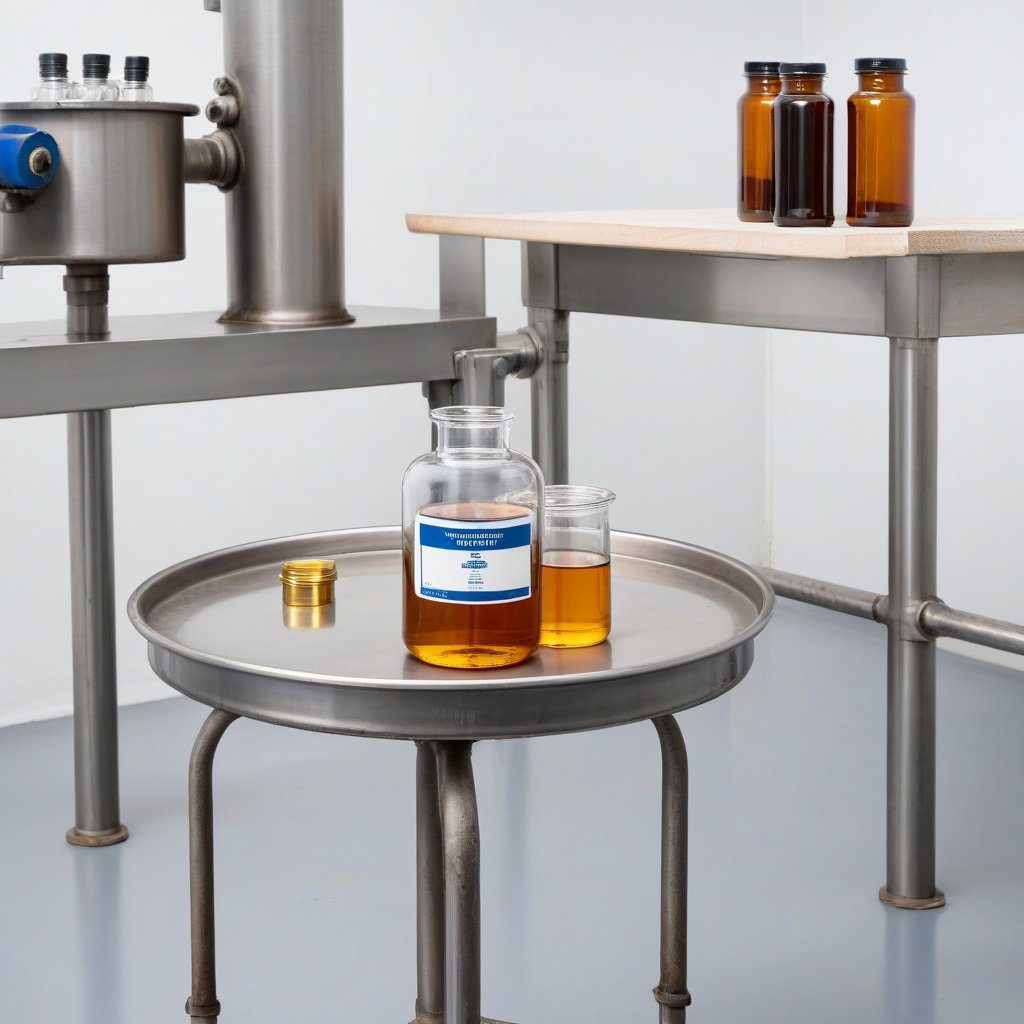
Purity testing is a cornerstone of reliable palm kernel oil (PKO) supply.
For buyers and manufacturers, understanding how ISO standards compare with national testing frameworks can spell the difference between consistent product performance and costly quality excursions.
This guide delves into the core purity parameters for PKO, clarifies how ISO testing methods align with or diverge from national standards, and provides practical strategies to optimize QA/QC across the value chain.
Drawing on two decades of experience in chemical and oleochemical supply, Diplomata Comercial demonstrates how rigorous testing translates into measurable outcomes for HPPC, pharma, food ingredients, and animal nutrition industries.
We’ll explore why purity matters for PKO quality, how testing approaches differ in global versus local contexts, and how to build a supplier relationship that delivers traceable, high-quality PKO at scale.
In today’s dynamic markets, purity testing is not just a protocol—it’s a strategic asset that protects brands, reduces risk, and accelerates time to market.
Understanding Purity Testing for Palm Kernel Oil: ISO Standards vs National Standards
What purity means for PKO quality
Purity testing for palm kernel oil centers on detecting deviations that could impact performance, safety, or shelf life. Palm kernel oil quality hinges on parameters like moisture, free fatty acids, oxidation products, and contaminant levels.
When a PKO sample shows elevated moisture, FFA, or peroxide values, the oil may degrade faster, affect formulations, or fail downstream processing.
For stakeholders, purity is not just a number; it’s a signal about process control, sourcing integrity, and stability across shipments.
In practice, purity is a mosaic of interrelated measurements.
A high acid value can indicate hydrolytic degradation, while elevated peroxide value signals oxidative processes. Moisture content affects microbial risk and storage, and trace contaminants can influence taste, color, and regulatory compliance.
The right purity framework gives buyers confidence that PKO meets functional specs for oleochemicals, food ingredients, and animal nutrition alike.
From a practical standpoint, an effective purity strategy combines at least the core tests across moisture, acidity, oxidation, and saponification behavior, with spot checks for contaminants and fatty acid profile.
This integrated view aligns with the expectations of international buyers and helps maintain consistent quality across regional supply chains.
How ISO and national standards shape testing scope
ISO standards establish globally recognized methodologies for evaluating PKO purity.
They typically emphasize repeatability, traceability, and documented QA/QC practices, enabling consistent results across laboratories and geographies.
When suppliers and customers adopt ISO-based testing, they gain a common language to discuss purity, acceptance criteria, and corrective actions.
The most visible purity domains include acid value, peroxide value, moisture content, and iodine value, among others.
These domains help define whether PKO meets general quality targets and specific regulatory or customer specs.
National standards, by contrast, reflect local regulatory expectations, lab capabilities, and market realities.
They may adapt ISO methods to align with regional materials, equipment, and training levels.
In some jurisdictions, national standards might streamline certain tests for speed and cost, or emphasize particular contaminants relevant to local supply chains.
The practical effect is that PKO purity results may look similar at a glance, but the test mix, acceptance criteria, and calibration protocols can differ.
That’s why many global buyers require alignment to ISO methods while also verifying local regulatory conformance through the supplier’s QA documentation and third-party certifications.
ISO Purity Testing Methods for Palm Kernel Oil: Core Parameters and Procedures
Core purity parameters and why they matter
ISO-based purity testing for PKO typically centers on key indicators: acid value, peroxide value, moisture content, iodine value, and sometimes ester value or saponification value.
Each parameter provides a lens into different aspects of oil quality.
For example, acid value reflects hydrolysis of triglycerides, peroxide value signals primary oxidation, and moisture content relates to water activity that can catalyze hydrolytic and microbial processes.
Iodine value informs about unsaturation, which can influence oxidative stability and downstream esterification reactions.
Together, these measurements form a robust purity profile that informs formulation, shelf life, and regulatory compliance.
Understanding the interplay among these parameters helps buyers and suppliers set realistic acceptance ranges.
A PKO lot with excellent color and aroma but borderline moisture may require adjusted storage or handling conditions.
Conversely, low moisture coupled with stable peroxide values supports longer shelf life and better stability in oleochemical reactions.
In practice, purity is best governed by a comprehensive specification sheet anchored in ISO methodologies and validated by routine proficiency testing.
Instrumental and wet chemistry approaches (KF, GC, HPLC) used in ISO testing
Purity testing under ISO guidelines often combines wet chemistry with instrumental analyses to achieve reliable results.
For moisture, Karl Fischer titration (KF) remains the reference method due to its specificity and sensitivity for water in fats and oils.
For oxidation assessment, redox-driven methods or gas chromatography-based tracers can be employed alongside traditional peroxide testing to capture oxidative status.
Acid value and saponification value rely on established titration and chemical hydrolysis procedures, respectively, which are straightforward to implement in most QA laboratories.
Advanced PKO purity programs may incorporate fatty acid profiling via gas chromatography or triglyceride composition analysis when customers demand deeper insights into the oil’s biochemical fingerprint.
This multi-tool approach fosters robust traceability and helps prevent mislabeling or adulteration.
Across all methods, rigorous calibration, participation in proficiency schemes, and documented QA protocols ensure results that are credible for global commerce. Purity testing under ISO becomes more actionable when laboratories maintain instrument maintenance logs, standard operating procedures, and calibration certificates that are readily auditable by customers and regulators.
National Standards in Palm Kernel Oil Purity: Practical Realities and Local Compliance
Regional lab capabilities and GMP expectations
National standards reflect local laboratory ecosystems, including equipment availability, staff training levels, and regulatory expectations.
Many regions emphasize Good Manufacturing Practice (GMP) and QA systems that drive consistent results, even when adopting ISO methods for core measurements.
In practice, national purity programs may favor streamlined testing regimens to support high-volume throughput, with clearly defined acceptance criteria tailored to regional customer bases.
For palm kernel oil, labs often standardize on a core panel—moisture, acid value, peroxide value, and iodine value—augmented by spot checks as required by customer specifications or market regulations.
For purchasers, understanding the local lab landscape is essential.
Regions with strong oleochemical industries typically demonstrate higher lab accreditation rates, more frequent proficiency testing, and better traceability practices.
When a supplier operates under a robust national standard framework, buyers gain confidence that the PKO they source is evaluated in environments designed to sustain steady quality and regulatory compliance across the supply chain.
Aligning PKO specs with customer needs and regulatory frameworks
National standards often reflect consumer safety, labeling, and import/export requirements that shape PKO purity targets.
In practice, this means that a PKO intended for food-grade applications may be subject to stricter moisture or FFA thresholds than a grade used for industrial oleochemistry.
Suppliers that align with national standards—and, ideally, also demonstrate conformance to global frameworks like ISO 9001 for quality management—offer dual assurance: local compliance plus global credibility.
For buyers, this alignment reduces the risk of non-conforming shipments and streamlines customs clearance, audits, and product certifications at destination markets.
Diplomata Comercial’s experience across B2B channels teaches that the most resilient PKO programs blend the reliability of ISO-aligned testing with the practical realism of national standards.
The result is a testing regimen that not only meets regulatory floor but also underpins predictable performance in high-demand formulations across HPPC, pharma, and nutrition segments.
Case Studies: Real-World Impacts of ISO vs National Standards
Case Study: ISO-aligned testing preventing surprises in export shipments
A mid-size PKO consumer products company faced a string of rejected shipments due to inconsistent moisture readings when importing PKO from a regional supplier.
By migrating to ISO-aligned purity testing with standardized documentation, the supplier achieved tighter moisture control, harmonized acid and peroxide values, and implemented a transparent traceability framework.
The result was improved batch-to-batch consistency, fewer hold-ups at border checks, and smoother onboarding of new ingredients for downstream products.
For the buyer, the move translated into reliable supply continuity, better production planning, and enhanced ability to meet market launch timelines.
In this context, palm kernel oil quality improvements were not just about a single test result; they were about a holistic QA culture—calibrated equipment, documented SOPs, and proactive QA/QC collaboration with the customer.
This is a textbook example of how ISO-based purity testing can de-risk global supply chains and protect brand integrity.
Case Study: National standard gaps and internal QC to bridge the gaps
Another PKO supplier operating primarily under local standards encountered occasional deviations flagged by customers importing into jurisdictions with stricter purity expectations.
The supplier addressed the gaps by instituting enhanced internal QC, including batch-level testing with a cross-check panel that mirrored ISO methods for critical tests while maintaining the national framework for throughput.
They also adopted third-party audits and supplier development programs to elevate lab capabilities.
The outcome was a measurable reduction in mislabeling incidents, improved customer confidence, and a broader export footprint that leveraged national standard compliance without sacrificing ISO-aligned quality visibility.
These cases illustrate that the most resilient PKO purity programs integrate the strengths of both standards ecosystems.
They emphasize that a robust quality culture—supported by traceable testing, rigorous calibration, and continuous improvement—delivers the most consistent and reliable PKO purity outcomes for diverse end-uses.
Practical Guidance for Buyers: How to Evaluate Purity Testing Capabilities
Key questions to ask suppliers and labs
When evaluating a PKO supplier or lab, start with a structured set of questions that reveal testing credibility and traceability.
Ask about: QA/QC programs, including documented SOPs and instrument maintenance logs; proficiency testing participation and results; accreditation status (e.g., ISO/IEC 17025 or equivalent) and the scope of testing; how purity testing results are reported (raw numbers, acceptance criteria, and out-of-spec actions); and the supplier’s process for nonconforming lots, investigations, and corrective actions.
Clarify whether they perform ISO-based testing, national methods, or a combination, and how they handle cross-checks for critical tests like moisture, acid value, and peroxide value.
Finally, ask about traceability: lot documentation, batch records, and chain-of-custody from source to finish goods.
From a buyer perspective, you want suppliers who can demonstrate consistent performance, timely testing turnarounds, and clear communication across the full chain of custody.
A credible PKO partner should present a transparent testing calendar, standard reporting formats, and rapid escalation channels for critical purity deviations.
How Diplomata Comercial ensures PKO purity across the value chain
With over 20 years in the chemical and oleochemical arenas, Diplomata Comercial has built a robust framework to deliver PKO purity with global reach and local reliability.
Our approach blends ISO-aligned testing with practical regional expertise, ensuring that clients receive PKO that meets both international expectations and regional regulatory requirements.
We prioritize:.
- Comprehensive QA/QC programs that integrate moisture, acid value, peroxide value, and iodine value testing, with optional fatty acid profiling for customers needing deeper characterization.
- Rigorous instrument calibration, laboratory proficiency, and routine external audits to reinforce test integrity.
- End-to-end traceability, from raw material sourcing to final shipment, supported by transparent documentation and online access to COAs and test reports.
- 物流 and distribution excellence, enabling rapid delivery across Brazil and international markets without compromising testing credibility.
For buyers seeking a partner capable of ensuring PKO purity while maintaining scale and speed, Diplomata Comercial stands out as a proven supplier, distributor, and exporter of high-quality oleochemical inputs.
Our experience across HPPC, pharmacy, industrial chemistry, and animal nutrition translates into reliable PKO purity across complex supply chains.
Next Steps for Purity Testing Excellence in Palm Kernel Oil
Choosing the right PKO purity framework is a strategic decision that impacts product performance, regulatory compliance, and supply continuity.
Build your specification package around ISO-method purity testing for core tests (moisture, acid value, peroxide value, iodine value) while recognizing the practical realities of national standards in your region.
Ensure that your supplier offers transparent QA processes, traceable lot documentation, and a plan for continuous improvement.
By partnering with a proven supplier like Diplomata Comercial—backed by 20 years of experience, global reach, and deep expertise in palm kernel oil and oleochemicals—you can align purity testing with tangible business outcomes: consistent PKO quality, reduced risk, and faster time-to-market for your formulations and products.
If you’re evaluating PKO purity for export or domestic use, connect with our team to discuss your testing requirements, supply needs, and QA expectations.
Let us help you secure resilient PKO purity, worldwide.
Perguntas Frequentes
O que é o teste de pureza para PKO e por que ele é importante?
Purity testing se refere à detecção de desvios que possam afetar o desempenho, a segurança ou a vida útil do óleo de palma kernel (PKO). A qualidade do PKO depende de parâmetros como umidade, ácidos graxos livres (FFA), produtos de oxidação e níveis de contaminantes. Quando a amostra apresenta umidade elevada, FFA ou valores de peroxide maiores, o óleo pode se degradar mais rápido, comprometer formulações ou falhar em operações downstream. Assim, a pureza é mais que um número: é um indicador de controle de processo, integridade de suprimento e estabilidade ao longo de várias remessas.
Quais são as principais diferenças entre ISO e padrões nacionais para PKO?
ISO oferece métodos e critérios de aceitação globalmente alinhados, facilitando comparabilidade entre fornecedores internacionais. Padrões nacionais refletem regulações locais, práticas de abastecimento e exigências do mercado doméstico. As diferenças comuns incluem métodos de ensaio, materiais de referência e critérios de aceitação, o que pode impactar a comparabilidade entre lotes. Entender esses gaps é essencial para manter consistência de qualidade e rastreabilidade.
Como as normas ISO se comparam com padrões nacionais em termos de métodos de teste para PKO?
Os métodos de teste para PKO sob ISO costumam cobrir parâmetros-chave como umidade, FFA, PV e contaminantes com protocolos padronizados. Enquanto ISO busca harmonização, padrões nacionais podem adotar variações em equipamentos, cálculos ou requisitos de validação. Em alguns casos, há alinhamento direto, em outros é necessário mapeamento (crosswalk) para comprovar equivalência. Verificar essas diferenças ajuda a evitar surpresas em auditorias e na cadeia de suprimentos.
Quais parâmetros de pureza são mais críticos para PKO?
Os parâmetros de pureza mais críticos para PKO incluem umidade, ácidos graxos livres (FFA), valor de peróxido (PV), produtos de oxidação e contaminantes traços. Esses fatores influenciam desde a estabilidade até a segurança e a compatibilidade com formulações. Um aumento nesses parâmetros pode reduzir vida útil e afetar o desempenho em aplicações finais. Por isso, o monitoramento desses indicadores é central no QA/QC de PKO.
Como escolher entre ISO ou padrões nacionais para QA/QC na cadeia de suprimentos?
Para escolher entre ISO ou padrões nacionais no QA/QC da cadeia de suprimentos, leve em conta requisitos regulatórios, expectativas dos clientes e o nível de risco aceitável. Priorize rastreabilidade, compatibilidade entre fornecedores e a capacidade de demonstrar conformidade em auditorias internacionais. Implementar programas de garantia de qualidade com alinhamento entre padrões facilita operações globais e reduz variações entre lotes.
Quais estratégias práticas para otimizar QA/QC do PKO com base na pureza?
Desenvolva um plano de QA/QC robusto com ensaio rotineiro para os principais parâmetros de pureza (humidade, FFA, PV, contaminantes). Garanta calibração regular de instrumentos e participação em programs de proficiência entre laboratórios. Mantenha documentação clara de rastreabilidade de amostras, métodos usados e resultados. Considere auditorias de processo e comparações entre fornecedores para melhoria contínua.
Como a pureza afeta aplicações do PKO (HPPC, pharma, foods, animal nutrition)?
A pureza afeta diretamente formulações de PKO usadas em HPPC, farmacêuticos, alimentos e nutrição animal, influenciando estabilidade, segurança e consistência de desempenho. Umidade elevada ou PV alto podem acelerar degradação, gerar defeitos de sabor ou reduzir a vida útil do produto final. Requisitos específicos de pureza costumam variar por aplicação, exigindo controles mais rigorosos para setores sensíveis. A gestão de pureza, portanto, é estratégica para atender normas regulatórias e expectativas de clientes.
Dicas para colaborar com fornecedores para garantir pureza de PKO?
Estabeleça acordos de qualidade com fornecedores, incluindo direitos de auditoria, declarações de conformidade e COAs (certificados de análise). Exija rastreabilidade em nível de lote e a capacidade do fornecedor de demonstrar histórico de pureza para PKO. Realize avaliações e onboarding de fornecedores com foco em histórico de pureza, consistência de entrega e conformidade regulatória.