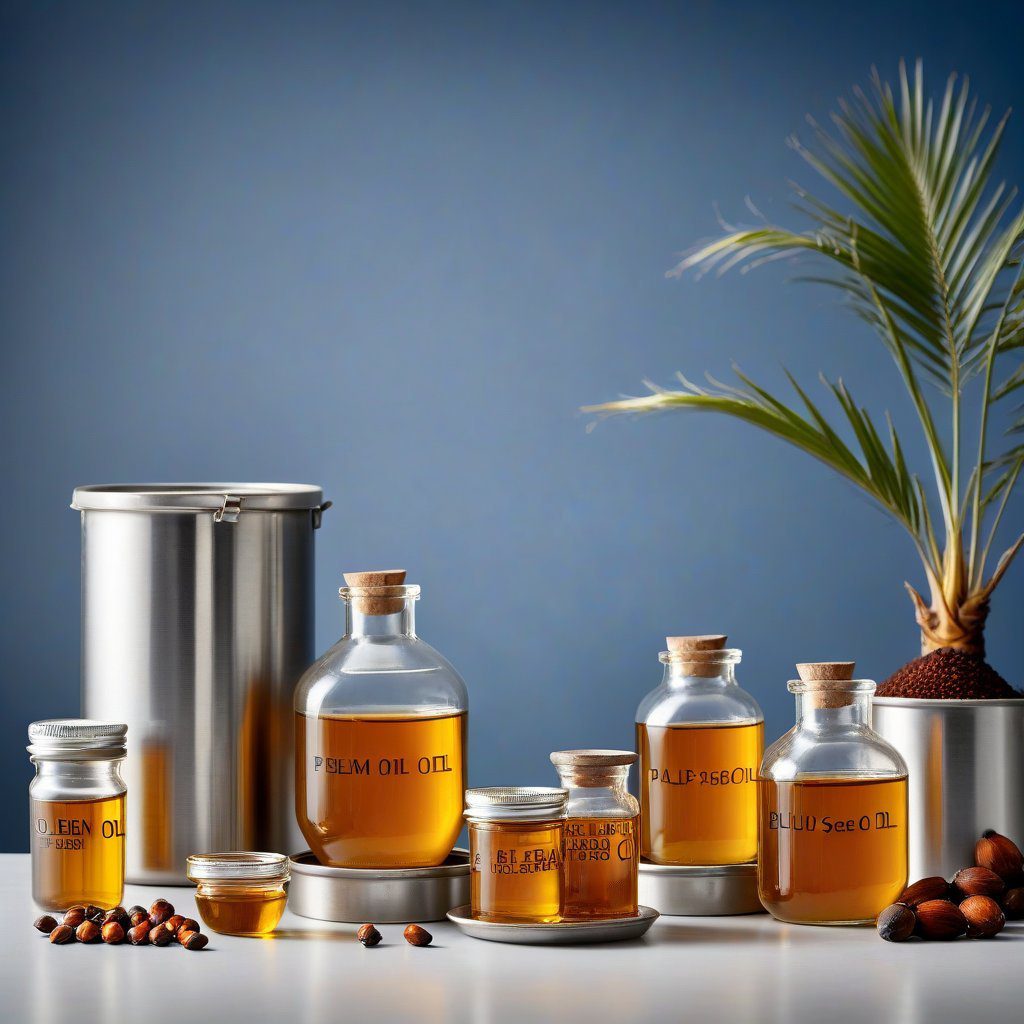
Sourceing palm kernel oil in bulk requires a strategic, data-driven approach that blends global sourcing capabilities with local execution.
For businesses in HPPC, pharma, industrial chemistry, and nutrition, choosing the right supplier means more than price: it’s about reliability, traceability, and the ability to scale with demand while maintaining product integrity.
Over two decades, Diplomata Comercial has refined its approach to delivering high-quality oleochemicals across markets, combining technical expertise with an extensive supplier network.
This guide blends practical steps with industry insights to help you build a robust palm kernel oil supply that supports both short-term needs and long-term growth.
You’ll see how to translate complex requirements into a clear sourcing roadmap—one that prioritizes quality control, certifications, and logistics resilience so your operations stay competitive in volatile markets.
By treating palm kernel oil procurement as a strategic partnership rather than a transactional purchase, you’ll unlock better pricing, steadier supply, and greater confidence across your value chain.
Let’s dive into a process you can apply today, with concrete examples drawn from real-world sourcing programs and the Diplomata Commercial approach to global palm kernel oil supply.
How to Source Palm Kernel Oil in Bulk: The Definitive Guide to Selecting Suppliers
Starting with precise specifications is the foundation of successful bulk procurement.
When you articulate needs clearly, suppliers can demonstrate capability with measurable metrics, reducing negotiation time and accelerating onboarding.
This section outlines step-by-step actions to define your requirements and align them with supplier capabilities, while embedding quality assurance and traceability as non-negotiables from day one.
The outcome is a shortlist of credible partners who can meet your technical, regulatory, and commercial expectations for palm kernel oil supply at scale.
1. Start with Clear Specifications
Begin with the product you want: specify the grade, viscosity range, fatty acid profile, impurities limits, and storage conditions.
Your specification should cover the entire lifecycle, from raw material sourcing to finished product handling at your plant.
In practice, clients who provide detailed SDS, MSDS, and GMP-like documentation accelerate vendor qualification and reduce post-award changes that disrupt production.
How to apply this in real life: create a standard specification sheet that includes physical-chemical properties, packaging formats (drums, IBCs, bulk tankers), and preferred certifications (such as ISO quality management and relevant food/ cosmetic standards where applicable).
A concise spec serves as a backbone for supplier audits, sampling plans, and contract clauses.
Diplomata Comercial leverages standardized templates developed over years of cross-border trade to ensure every order starts with a solid foundation.
In parallel, map your logistics requirements—lead times, minimum order quantities, and delivery windows.
These details affect supplier selection as much as technical specs do.
For example, a producer with a robust production schedule and diversified port access can offer shorter lead times and less risk during peak seasons, a critical advantage for manufacturers facing seasonality in feed or oleochemical demand.
2. Prioritize Certifications and Compliance
Regulatory alignment is non-negotiable for bulk purchases.
Your procurement checklist should include evidence of certifications such as ISO 9001 for quality management, plus any sector-specific standards related to palm-derived products.
Look for evidence of supplier integrity across the supply chain: certified mills, traceability documentation, and third-party audit results.
These factors collectively reduce compliance risk and support sustainability claims that matter to customers and regulators alike.
From an EEAT perspective, partnering with a distributor who has demonstrable international reach and credibility matters.
Diplomata Comercial emphasizes rigorous supplier vetting and ongoing surveillance to sustain a stable palm kernel oil supply chain that meets both regulatory and customer expectations.
The result is a procurement program built on traceability and regulatory compliance as core competencies, not afterthoughts.
3. Define Quality Assurance Milestones
Establish a clear QA plan that includes sample testing at intake, periodic batch analyses, and acceptance criteria aligned with your downstream process.
Your plan should address contaminants, oxidation stability, and peroxide values, with thresholds that match your product’s end-use sector—whether it’s nutraceuticals, cosmetics, or industrial formulations.
Short cycles for testing and rapid feedback loops help you avoid disruptions and keep production running smoothly.
Ensure you have a reliable method for handling non-conforming lots.
A well-designed remediation plan minimizes waste and maximizes salvage options, which is especially valuable in bulk procurement where margins can be tight.
In practice, Diplomata Comercial supports clients with technical teams who interpret lab results, translate them into actionable procurement decisions, and coordinate quick corrective actions with suppliers when needed.
Assessing Suppliers for Palm Kernel Oil Bulk: From Capabilities to Global Reach
Building a long-term palm kernel oil supply requires careful evaluation of supplier capabilities and market reach.
This section explains how to assess production capacity, sourcing reliability, and the ability to scale with your business.
You’ll learn to balance cost efficiency with quality consistency, while keeping an eye on sustainability and traceability to protect your brand and your customers.
1. Vet Production Capabilities and Output Capacity
Quantify annual production capacity, average runs, and the supplier’s ability to ramp up during demand surges.
A credible palm kernel oil supplier should provide data on production uptime, yield consistency, and alternates in feedstock sourcing to avoid bottlenecks.
You’ll want to confirm the supplier’s ability to meet your minimum order quantities without compromising lead times or quality.
This practical due diligence reduces the risk of shortfalls and last-minute price spikes.
Real-world tip: evaluate suppliers based on the breadth of their raw material network.
A diversified supply base lowers dependency on a single mill and protects you from geographic disruption.
Diplomata Comercial’s global network and two-decade experience enable rapid redirection of supply when regional constraints arise, maintaining continuous palm kernel oil supply for customers across industries.
2. Examine Sustainability and Traceability Programs
Modern buyers expect transparent supply chains.
Request documentation demonstrating traceable harvest and processing practices, supplier audits, and third-party certifications related to sustainability.
You should also assess how risks are managed—environmental, social, and governance (ESG) considerations—as these factors increasingly influence procurement decisions and long-term viability of palm kernel oil supply chains.
In practice, implement a vendor scorecard that weighs sustainability metrics alongside cost and reliability.
A well-structured scorecard helps you compare candidates objectively and justify supplier selections to internal stakeholders.
Diplomata Comercial’s emphasis on traceability and a robust international network allows customers to align procurement with sustainability goals without sacrificing performance.
3. Review Logistics Capabilities and Global Footprint
Logistics readiness is a practical differentiator.
Confirm that a supplier can handle packaging, insurance, customs clearance, and regulatory compliance in key markets.
A strong partner will offer end-to-end solutions, from port-to-plant delivery, and provide options for outsourcing or co-managing the logistics chain when needed.
The ability to move swiftly through documentation, attestations, and freight arrangements reduces cycles and improves buildability in your production plan.
For mid-to-large scale buyers, a supplier with established export capabilities can support multi-country programs, consolidations, and regional distribution.
This is where Diplomata Comercial’s international reach proves advantageous, delivering not only high-quality palm kernel oil but also reliable service and predictable scheduling across borders.
Cost Modeling and Total Cost of Ownership in Palm Kernel Oil Bulk Procurement
Bulk purchases hinge on more than unit price.
A robust total cost of ownership (TCO) model captures all direct and indirect costs, from transport and storage to quality assurance and risk mitigation.
This section outlines practical strategies to model TCO for palm kernel oil supply, helping you avoid hidden costs and optimize profitability across the lifecycle of your product.
1. Understand Market Benchmarks and Pricing Dynamics
Pricing for palm kernel oil bulk is influenced by feedstock availability, regional production cycles, currency fluctuations, and freight rates.
Build a pricing framework that includes base price, freight, insurance, handling, and any surcharges.
Include a mechanism for price re-negotiation at defined intervals to reflect market shifts, while protecting your planned margins with hedging or long-term supply agreements where feasible.
A practical approach is to run scenario analyses: best-case, baseline, and stress cases.
Each scenario should show the impact of price movements and lead-time changes on total procurement cost.
This disciplined analysis helps procurement teams communicate value to finance and operations and supports strategic decisions on contract duration and volume commitments.
2. Account for Logistics, Storage, and Handling
Bulk oils require appropriate storage to maintain quality.
Consider the costs of insulated storage facilities, temperature control, and shelf-life management.
When negotiating terms, factor in packaging options, container compatibility, and the potential need for on-site blending, filtration, or deodorization.
These steps influence overall TCO and the feasibility of long-term supply plans.
In many organizations, a portion of cost variance stems from logistics reliability.
Establish service levels with explicit penalties or incentives for on-time delivery, accurate documentation, and damage-free receipt.
A supplier with a proven logistics playbook can significantly reduce operational risk and smooth production planning, contributing to lower total costs over time.
3. Include Quality and Compliance in the Economic Picture
Quality assurance is a cost driver but also a risk mitigator.
Include costs for testing, batch release, and returns handling in your TCO model.
In contrast, high-quality materials reduce waste and downstream quality issues that can disrupt production lines and erode margins.
A supplier that integrates QA into the procurement cycle—through rapid testing, batch traceability, and robust supplier auditing—helps stabilize your cost structure and safeguard your brand.
Diplomata Comercial’s approach integrates technical QA with commercial discipline.
By aligning supplier performance with client specifications and market realities, we help customers optimize TCO while achieving consistent, high-quality palm kernel oil supply across geographies.
Quality Assurance and Stability: Ensuring Consistent Palm Kernel Oil Supply
Consistency is the backbone of manufacturing success.
This section focuses on establishing a sustained quality framework and a reliable supply chain that minimizes variability, protects product integrity, and meets regulatory and customer expectations for palm kernel oil in bulk.
1. Establish a Robust Sampling and Testing Regime
Define sampling frequency, test methods, and acceptance criteria aligned with your downstream uses.
A practical regime includes incoming material testing, in-process checks for additive compatibility, and final product verification.
Ensure data transparency by receiving certificates of analysis (COAs) and test results that you can trace to a specific batch and lot.
This transparency reduces disputes and speeds up release to production lines.
In practice, creating a clear, auditable testing trail supports cross-functional teams—procurement, QA, and supply planning—by providing objective evidence of compliance.
A reputable supplier will provide COAs promptly and maintain a QA dashboard you can reference for batch-level decisions.
2. Manage Stability, Storage, and Shelf Life
Palm kernel oil quality degrades if not stored properly.
Implement controls for temperature, humidity, and light exposure in warehouse facilities.
Define shelf life expectations and rotation policies to minimize aging and oxidation, which can affect performance in end-use products.
Your storage strategy should be integrated with your production planning to avoid stockouts or over-retention of aging lots.
Proactively collaborate with suppliers on storage recommendations and packaging updates that extend shelf life and preserve performance.
Diplomata Comercial supports clients with guidance on best-practice storage and handling, drawing on multi-market experience to tailor solutions to regional climate and infrastructure realities.
3. Build a Continuous Improvement Loop
Quality is not a one-and-done achievement.
Establish mechanisms for ongoing feedback, supplier development, and corrective action processes.
Regular reviews with key suppliers help you identify process drift, address root causes of quality excursions, and strengthen the integrity of your palm kernel oil supply chain over time.
By cultivating a continuous improvement culture, you increase the resilience of your supply and reduce the likelihood of recurring issues.
This approach aligns with the best practices of leading oleochemicals distributors, including a mature emphasis on quality control and risk management.
Logistics and Supply Chain Resilience for Palm Kernel Oil
Efficient logistics are the lifeblood of a reliable palm kernel oil supply.
This section provides a practical playbook for timing, documentation, and risk mitigation, helping you stay on schedule even when markets behave unpredictably.
The goal is a seamless flow from supplier mills to your production facility with minimal friction and maximum predictability.
1. Packaging, Handling, and Transportation Considerations
Choose packaging formats that optimize safety, regulatory compliance, and shipping efficiency.
Consider the tradeoffs between drums, totes, and bulk containers, and align packaging with your storage facilities and handling capabilities.
For hazardous or sensitive materials, ensure compliance with applicable international shipping regulations and regional requirements.
A well-choreographed packaging strategy reduces damage, speeds loading, and lowers total landed costs.
Coordination between supplier, carrier, and inland logistics providers is essential.
A unified plan should cover scheduling, loading procedures, and documentation handoffs to prevent delays and miscommunications.
Diplomata Comercial often facilitates integrated logistics solutions, ensuring that your palm kernel oil arrives on time and in the expected condition, no matter where you are located.
2. Risk Mitigation, Contingency Planning, and Alternate Sourcing
Build redundancy into your supply chain to protect against disruptions.
Identify alternative mills, alternate ports, and secondary carriers so you can pivot quickly if a supplier faces capacity constraints or geopolitical risks.
This proactive approach reduces downtime and helps you maintain production stability across regions.
Incorporating scenario planning into procurement conversations with suppliers shows strategic foresight.
It demonstrates your commitment to uninterrupted supply and positions you for more favorable terms in the long run.
Diplomata Comercial has a history of coordinating resilient supply networks that remain operational under volatile conditions, delivering dependable palm kernel oil supply for global customers.
Diplomata Comercial: A Trusted Partner for Global Palm Kernel Oil Supply
Choosing the right partner for bulk palm kernel oil is as much about strategic alignment as it is about product quality.
With twenty years of market presence, Diplomata Comercial has built a reputation for technical excellence, personalized service, and a broad international footprint.
We serve multiple industries—HPPC, pharma, chemical industry, and nutrition—delivering raw materials and oleochemicals with consistency, speed, and scalability.
Our approach is built on strong relationships, robust QA, and agile logistics, enabling our clients to access reliable palm kernel oil supply across geographies while maintaining strict quality and regulatory standards.
In practice, our team acts as an extension of your procurement function, turning complex global sourcing into a repeatable, auditable process that supports sustainable growth and competitive advantage.
1. Two Decades of Industry Experience
Experience translates into better supplier relationships, smarter risk management, and more accurate forecasting.
Our long-standing presence in the chemical and oleochemical markets means we understand not only how to source palm kernel oil, but how to navigate the regulatory, environmental, and commercial complexities of global trade.
This depth of experience translates into smoother onboarding, faster resolution of issues, and a broader network that automatically enhances your palm kernel oil supply resilience.
We’ve learned what works across different sectors—from nutraceuticals to industrial formulations—and tailor our approach accordingly.
Our customers appreciate that we bring practical insight, not generic advice, to every stage of the procurement journey.
2. Custom Solutions, Global Reach, and Rapid Execution
A key differentiator is our ability to design customized procurement programs that align with your operations, risk tolerance, and growth trajectory.
Whether you need a long-term supply agreement, a quarterly program with flexible volumes, or a peak-season surge plan, we craft a solution that fits.
Our international footprint ensures you can source consistently from reliable mills, with end-to-end visibility and proactive communication at every step.
For teams seeking a trusted partner that can scale with them, Diplomata Comercial offers a combination of quality assurance, traceability, and operational discipline that translates into real business value: lower risk, predictable costs, and faster time-to-plant.
Operational Checklist: 10 Critical Steps Before Signing a Palm Kernel Oil Supply Agreement
Before finalizing a supplier relationship, run through a disciplined operational checklist.
This section translates the theory of good sourcing into a practical, action-oriented sequence you can apply to any potential partner.
Each step helps ensure you’re buying not just oil, but a reliable supply program that aligns with your production schedule and quality standards.
1. Confirm Technical Compliance and Product Specifications
Revisit the product specs with the supplier and ensure all critical parameters are agreed in writing.
Confirm packaging, storage, and handling requirements, as well as QA test methodology and acceptance criteria.
A well-documented specification reduces change orders and accelerates the go-live phase.
Key takeaway: require a formal acceptance protocol and a clear process for handling deviations.
This reduces risk and fosters a collaborative, long-term relationship with your supplier.
2. Validate Reliability Metrics and Compliance Credentials
Audit the supplier’s capacity, delivery performance, and regulatory credentials.
Look for ISO certifications, third-party audit results, and evidence of sustainable practices.
Ensure that the supplier can sustain your required service levels even during market stress.
If possible, request recent performance dashboards and references from other customers in similar industries.
Trust is built on measurable facts.
A credible supplier will provide data-driven evidence of reliability and compliance, reinforcing your confidence in the partnership.
Próximos Passos Estratégicos
With a clear sourcing framework, you’re positioned to secure a resilient palm kernel oil supply that scales with your business.
Start by consolidating your specifications, establishing a rigorous QA protocol, and building a supplier shortlist grounded in certifications, capacity, and logistics capability.
Leverage a partner like Diplomata Comercial to access a global network, maintain traceability across shipments, and benefit from two decades of oleochemical market experience.
If you’re ready to advance your procurement program, reach out to our team to discuss a tailored approach that matches your current needs and future growth trajectory.
A strategic collaboration today translates into dependable, cost-efficient palm kernel oil supply tomorrow.
Contact Diplomata Comercial to explore how we can support your bulk palm kernel oil requirements with global reach, quality assurance, and a practical, results-driven path to procurement optimization.
Our team is prepared to provide a transparent, data-backed plan aligned with your technical, regulatory, and commercial objectives.
Take the next step toward a more predictable and scalable palm kernel oil supply—let’s build a partnership that drives performance across your entire value chain.
Frequently Asked Questions
What key specifications should I define before sourcing palm kernel oil in bulk?
Define clear technical specs for palm kernel oil, including grade, iodine value, acid value, moisture, color, odor, and contaminant limits. Also specify packaging, form (bulk liquid or drums), required certifications, minimum order quantities, and traceability requirements. Include quality assurance expectations and regulatory compliance to avoid downstream issues.
How do I evaluate supplier reliability for palm kernel oil orders at scale?
Assess a supplier’s track record in bulk PKO, focusing on delivery reliability, capacity to scale, and financial health. Request references, audit results, and performance data such as on-time delivery and batch traceability, then validate them with a controlled pilot order. Look for responses to quality incidents and continuous improvement practices.
What certifications and quality controls are essential when selecting palm kernel oil suppliers?
Prioritize quality and safety certifications like ISO 9001, ISO 22000 or FSSC 22000, GMP, and HACCP. Consider sustainability and traceability credentials such as RSPO Chain of Custody if required. Verify third-party lab testing and robust QA programs to ensure consistent product integrity.
How can traceability be implemented in the palm kernel oil supply chain?
Implement batch/lot tracking from supplier to end-use, require certificates of analysis for each batch, and maintain digital records of audits, COAs, and supplier certifications. Use a transparent supply chain platform to link lot numbers to production dates and storage locations. Prepare recall procedures and ensure easy traceability across the value chain.
What logistics considerations are crucial for bulk PKO procurement?
Plan with clear Incoterms, lead times, and storage requirements (temperature, contamination control). Ensure packaging compatibility with bulk transport (tankers, drums) and address insurance, customs, and documentation. Build resilience through diversified carriers and contingency stock to navigate market volatility.
How can you balance cost with quality and supply stability when sourcing palm kernel oil?
Evaluate total landed cost, not only unit price, and pursue long-term supplier partnerships for favorable terms. Use multi-sourcing to reduce risk, implement volume-based incentives, and maintain a robust QA process to minimize costly quality events. Regularly review performance and adjust contracts accordingly.
What role does partnerships and supplier networks play in long-term PKO sourcing?
Strategic partnerships yield better pricing, reliability, and collaborative improvements in specs and processes. A broad supplier network enhances resilience against supply disruptions and market swings. Conduct ongoing performance reviews and jointly develop improvement plans to align capabilities.
What practical steps can I take today to start a bulk PKO sourcing program?
Define exact PKO specifications and compliance requirements, then identify potential suppliers and request information or quotes. Pre-qualify candidates with audits and certifications, run a small pilot order, and establish contracts with SLAs, traceability, and risk-management terms. Set up a QA plan to monitor ongoing quality and supplier performance.