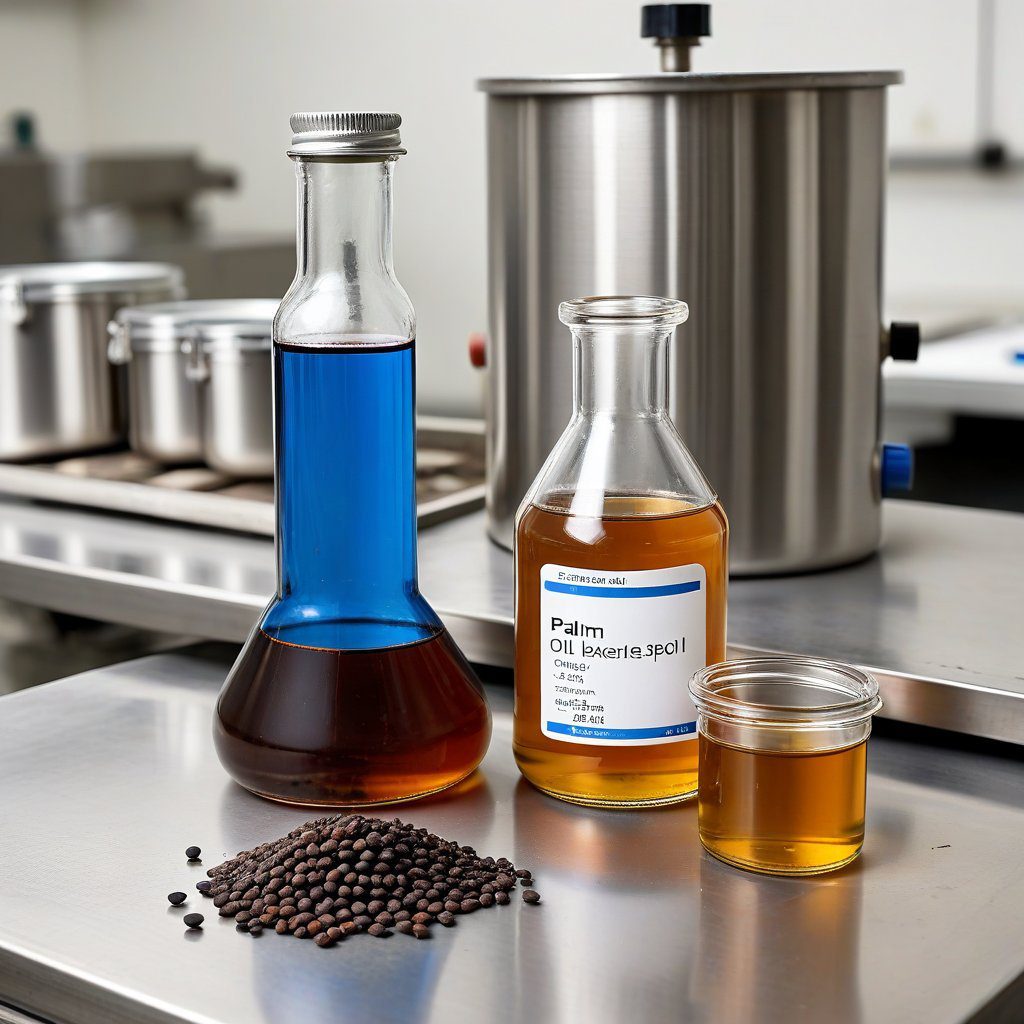
Palm Kernel Oil (PKO) is a cornerstone ingredient for many industrial formulations, prized for its balance of performance, processability, and supply reliability.
As a company with two decades of market experience, Diplomata Comercial brings a practical, hands-on perspective to PKO demands across HPPC, chemical manufacturing, cosmetics, and oleochemical applications.
This guide dives into the Palm Kernel Oil technical properties that matter most when formulating at scale, from fatty acid profiles and physical behavior to stability, compatibility, and supply chain considerations.
Whether you are blending for detergents, greases, or intermediates in oleochemical chains, understanding these properties helps you optimize yield, consistency, and total cost of ownership.
Our approach combines technical rigor with real-world application examples, underscoring how a global supplier with two decades of experience can de-risk sourcing, ensure traceability, and support continuous improvement in your formulations.
At Diplomata Comercial, quality, scale, and customer-focused service are not promises—they are the way we operate every day.
Palm Kernel Oil: Key Technical Properties for Industrial Formulations
Fatty Acid Profile and Its Impact on Performance
The fatty acid composition of PKO strongly influences cleansing, emulsification, and texture in formulations.
PKO is known for a lauric-acid rich profile that contributes to detergency, emollience, and rapid saponification, while still delivering sufficient polarity for stable emulsions.
In practice, formulators leverage this profile to achieve predictable surfactant performance, clear phase separation, and consistent foam characteristics across batches.
For manufacturers, a consistent fatty acid profile translates into tighter process windows and fewer reformulations.
At the same time, a balanced mix of saturated and medium-chain fatty acids supports both cleansing efficiency and product stability under typical storage conditions.
Working with a trusted supplier, you can expect detailed batch documentation that confirms the traceability and quality controls required for regulated markets.
This combination of performance and reliability is a hallmark of PKO used in oleochemicals and consumer-care products alike.
For context, the synergy between the fatty acid profile and emulsification chemistry often determines the success of a given formulation, whether in hard-surface cleaners or creamy personal-care products. Industrial formulations benefit from a PKO supplier that can align the fatty acid profile with the intended end-use, minimizing the need for corrective additives later in the process.
Physical Properties Relevant to Manufacturing
Physical behavior—such as melting range, crystallization tendency, and solid-fat content—directly affects processing, storage, and end-product texture.
PKO typically offers favorable processability due to its semi-solid nature at room temperature, enabling easier handling in large tanks, pumps, and blending systems.
This translates into smoother metering, reduced shear stress during mixing, and more stable emulsions when PKO is used as a co-emollient or co-surfactant.
For producers aiming for consistent batch-to-batch performance, controlling parameters like temperature during heating, mixing speed, and agitation duration becomes essential.
A reliable PKO supplier provides comprehensive data sheets that cover solubility, crystallization behavior, and viscosity profiles across processing temperatures.
These insights empower formulators to design robust processes, minimize downtime, and maintain product uniformity across regional plants and third-party manufacturers.
Oxidative Stability and Shelf Life in Industrial Use
Antioxidants Strategies and Storage Requirements
Oxidative stability is a critical driver of shelf life for PKO-based formulations.
Exposure to heat, light, and trace metals can accelerate oxidation, leading to off-flavors in edible-grade lines and color or odor changes in oleochemical products.
Antioxidants—whether natural tocopherols or approved synthetic stabilizers—are commonly employed to extend stability in industrial media.
Producers that integrate antioxidants early in the supply chain enjoy longer storage windows, reduced rate of quality drift, and lower risk of rework due to rancidity or color change.
A strategic approach combines antioxidant selection with proper packaging, UV-protective containment, and controlled-inventory practices.
In this context, a supplier with established QA protocols and robust traceability adds measurable value to your risk management plan.
The result is a PKO solution that maintains performance and appearance from warehouse to finished product, even under challenging tropical-to-temperate supply routes.
Packaging, Temperature Control, and Contaminant Prevention
Packaging and temperature control are fundamental to sustaining PKO quality in transit and storage.
Robust packaging reduces exposure to air, moisture, and light—factors that accelerate deterioration.
Temperature-controlled logistics help prevent phase separation in semi-solid grades and minimize the risk of spontaneous crystallization during long-haul shipments.
Beyond packaging, reputable suppliers implement container cleanliness programs and contaminant control to prevent trace metal transfer and hydrolytic degradation.
For formulators, these measures translate into fewer batch deviations, faster ramp-up in production lines, and more predictable performance in end products.
A trusted partner offers not only PKO but also end-to-end support that integrates storage, transportation, and quality assurance into a single, auditable workflow.
This alignment fosters confidence across regional manufacturing sites and global distribution hubs.
Viscosity, Melting Point, and Processability in Large-Scale Manufacturing
Temperature-Dependent Viscosity and Handling
Viscosity behavior across temperatures is a practical concern for storage, pumping, and downstream processing.
PKO typically exhibits a viscosity profile that responds predictably to heat, enabling stable pumping and consistent batch mixing within standard industrial equipment.
When formulators design blends with PKO, understanding viscosity-temperature curves helps determine optimal melt temperatures, agitation speeds, and shear conditions for emulsification, saponification, or transesterification steps.
A capable supplier provides both high-quality PKO and actionable processing notes—such as suggested heating ranges, agitation recommendations, and potential impacts on downstream reactors.
By aligning these insights with your equipment capabilities, you can reduce energy consumption, minimize chokepoints, and improve overall process efficiency.
Mixing, Emulsification, and Equipment Compatibility
Equipment compatibility is a practical concern in large-scale operations.
PKO’s rheological properties influence mixing time, shear rate requirements, and emulsification stability.
In practice, formulators benefit from case-based guidance on kilogram-to-ton batches, including recommended impeller types, mixer speeds, and sequence of addition for optimal dispersion.
Working with a globally trusted PKO supplier helps avoid common pitfalls, such as incomplete emulsification or phase separation in multi-component systems.
The goal is to achieve robust, scalable formulations where PKO consistently contributes to the desired texture, clarity, and performance across product lines—from heavy-duty detergents to high-end cosmetic emulsions.
Compatibility with Emulsifiers, Surfactants, and Oleo-chemical Reactions
Surfactant Compatibility and Emulsion Stability
Surfactant systems built around PKO benefit from predictable interactions with cationic, nonionic, anionic, and amphoteric components.
The lauric-rich profile of PKO can enhance primary surfactant cleansing and foaming while supporting emulsion stability in oil-in-water or water-in-oil systems.
When designing formulations, it pays to test PKO with your chosen emulsifiers to verify phase behavior, droplet size distribution, and creaming tendencies under real-world storage and usage conditions.
A strategic supplier offers testing protocols, compatibility matrices, and pilot-scale validation support to accelerate scale-up.
The result is a robust formulation library and faster time-to-market for your products, backed by rigorous QA data and batch traceability.
Catalytic Reactions and Oleochemical Intermediates
PKO serves as a versatile feedstock for various oleochemical reactions, including interesterification, hydrogenation, and epoxidation, enabling the synthesis of specialty esters, glycidyl derivatives, and higher-value intermediates.
Understanding PKO’s reactivity helps formulators select the right catalysts, process conditions, and downstream purification steps.
A dependable supplier not only provides PKO but also shares application notes and engagement in joint development programs that reduce risk and shorten development cycles.
This collaborative approach supports your strategic goals—delivering innovative intermediates for lubricants, plasticizers, and specialty chemicals while maintaining supply security.
Quality, Traceability, and Supply Chain Considerations for Palm Kernel Oil
Certifications, QA, and Regulatory Compliance
Quality assurance is a non-negotiable in industrial procurement.
PKO programs that include GMP-compliant processing, ISO-quality management, and appropriate purity classifications offer a solid foundation for compliance in diverse markets.
Traceability—from farm to finished product—helps satisfy customer requirements and regulatory expectations across sectors such as cosmetics, food processing, and industrial chemicals.
A reputable supplier provides documentation with batch-level QA results, non-conformity handling, and corrective action plans, giving you confidence in supplier performance and product integrity across multiple years of operation.
By aligning with a supplier that emphasizes transparency and continuous improvement, your organization reduces audit findings and strengthens supplier qualification programs.
Global Reach, Logistics, and Risk Management
Global reach matters when supply continuity is essential.
A PKO supplier with international sourcing, diversified freight options, and efficient cross-border logistics minimizes lead times and mitigates disruption risk.
Proactive risk management—such as safety stock strategies, alternative supplier routing, and contingency planning—ensures your manufacturing schedule remains intact even in volatile markets.
For multinational operations, this translates into predictable procurement costs, fewer production stoppages, and sustained competitiveness.
Diplomata Comercial’s network and logistics capabilities are designed to support regional production centers while maintaining consistent quality and delivery timelines across geographies.
Palm Kernel Oil Uses in Industrial Formulations: Practical Case Studies
Soap Noodles, Detergents, and Personal Care
In cleansing applications, PKO provides essential saponification value and emulsification behavior that support high-cleaning efficiency and stable product textures.
Soap noodles, a foundational input for many detergent bars, benefit from PKO’s fatty acid profile by delivering cleansing power and mildness.
For personal care products, PKO contributes to creamy emulsions, glide, and sensory attributes that consumers associate with quality.
Across these segments, the ability to source PKO that is consistent in composition and free from contaminants translates into fewer reformulations, shorter scale-up, and a streamlined regulatory path.
A trusted supplier with robust QA processes helps ensure that each batch aligns with defined performance targets and regulatory expectations for cosmetic and household use.
Lubricants, Greases, and Metalworking Fluids
Lubricant formulations leverage PKO’s balanced polarity and fatty acid content to contribute to lubricity, film formation, and oxidation resistance in challenging service conditions.
In metalworking fluids, PKO can help balance detergency with lubricity, supporting extended tool life and cleaner surfaces.
The compatibility with other base oils, thickening agents, and performance additives is a key consideration, and pilot testing with your specific system is recommended to confirm cleanliness, stability, and viscosity under operating temperatures.
When you engage with a supplier who combines technical depth with practical field experience, you gain access to formulation libraries, recommended test matrices, and supply chain support that accelerates project timelines.
Oleochemicals, Biodiesel, and Specialty Intermediates
PKO is a post-hydrolysis feedstock for a range of oleochemicals, biodiesel precursors, and specialty intermediates.
Its composition supports reactions that yield esters, glycerides, and other derivatives used in flexible manufacturing pipelines.
For manufacturers pursuing sustainability goals, PKO-based products can align with green chemistry principles when sourced from responsible, well-documented supply chains.
The collaboration with a supplier that integrates traceability, quality data, and customer-centric service helps reduce development risk and ensures a reliable path from concept to commercial production.
Strategic Next Steps for Palm Kernel Oil Formulations: Partnering with a Global Supplier
Our Experience, Capabilities, and Customer-Centric Approach
Diplomata Comercial brings more than twenty years of market experience to PKO supply and application support.
Our team combines technical expertise with hands-on operations knowledge to help you design formulations that scale—from pilot batches to full production.
We offer global sourcing, comprehensive QA, and end-to-end logistics to ensure consistent product quality and timely deliveries.
Our approach centers on understanding your specific end-use, regulatory framework, and supply chain constraints, then translating those needs into actionable formulation guidance, testing protocols, and supplier qualification milestones.
You gain a partner who communicates clearly, delivers with integrity, and provides ongoing value as your formulations evolve.
How we Ensure Reliability, Sustainability, and Traceability
Reliability is built through rigorous supplier qualification, transparent documentation, and proactive risk management.
We implement robust traceability practices that cover raw material origins, processing steps, and batch-level QA results.
Our sustainability framework emphasizes responsible sourcing, supplier audits, and continuous improvement initiatives aligned with industry best practices.
By combining these elements with global logistics capabilities, Diplomata Comercial helps you reduce supply-chain risk, optimize inventory, and maintain compliant operations across markets.
For teams seeking a trusted PKO partner, our integrated services—from technical support to logistics planning—translate into faster time-to-market and lower total cost of ownership.
Strategic engagement with a proven PKO supplier accelerates value realization in your formulations.
If you are evaluating options for high-quality palm kernel oil and related oleochemicals, consider a partnership that aligns technical excellence with dependable global supply.
Reach out to Diplomata Comercial to discuss your current formulation challenges, alignment with regulatory standards, and potential pilot programs.
Let us help you map a path from sourcing to scale, keeping your projects on time and on budget.
Frequently Asked Questions
What is Palm Kernel Oil and why is it used in industrial formulations?
Palm Kernel Oil (PKO) is a lauric-acid rich oil that serves as a cornerstone ingredient in detergents, greases, cosmetics, and oleochemical intermediates. It offers a practical balance of cleansing performance, processability, and supply reliability, supported by two decades of supplier experience. This combination makes PKO a reliable choice for formulations at scale.
How does PKO’s fatty acid profile affect performance in detergents and emulsions?
PKO’s lauric-acid rich profile drives detergency and fast saponification, while its moderate polarity helps stabilize emulsions. A consistent fatty acid composition supports predictable surfactant performance and stable phase behavior across batches. The balanced mix of saturated and medium-chain fats also aids product stability during storage.
What factors influence PKO stability and shelf life in formulations?
Stability is influenced by storage conditions (temperature, light exposure, and oxygen) and potential lipid oxidation. PKO tends to be stable under typical storage when protected from heat and oxidation, but drift in fatty acid profile can necessitate reformulation checks. Proper handling helps maintain performance over time.
How does PKO interact with other ingredients in formulations?
PKO generally blends well with common surfactants, emulsifiers, and hydrocarbon solvents used in detergents and cosmetics. Fatty acid composition and polarity influence phase behavior, so compatibility testing helps prevent unexpected phase separation. Understanding these interactions supports optimized clarity, foam, and texture.
What should buyers consider to ensure PKO traceability and supply reliability?
Look for documented supply chains, quality control records, and certifications. Choose suppliers with proven track records and transparent traceability, ideally with long-standing market presence. Proactive demand planning and risk management help de-risk sourcing and ensure consistent supply.
How does PKO affect total cost of ownership and process windows?
A consistent PKO fatty acid profile reduces reformulation needs and tightens process windows, lowering operational risk and waste. Stable supply lessens price volatility impact and improves batch-to-batch consistency. All of these factors contribute to a lower total cost of ownership over time.
Which applications most benefit from PKO properties?
Detergents, greases, cosmetics, and oleochemical intermediates leverage PKO’s detergency, emollience, and fast saponification. In HPPC and chemical manufacturing, PKO supports predictable performance and stability at scale. These properties make PKO a versatile choice across multiple industries.
What practical steps can formulators take to optimize PKO use?
Start with a target PKO fatty acid profile and run compatibility tests to guide formulation decisions. Consider blending PKO with other oils or additives to meet specific performance and stability requirements. Monitor batch consistency and collaborate with suppliers to safeguard quality and minimize reformulations.