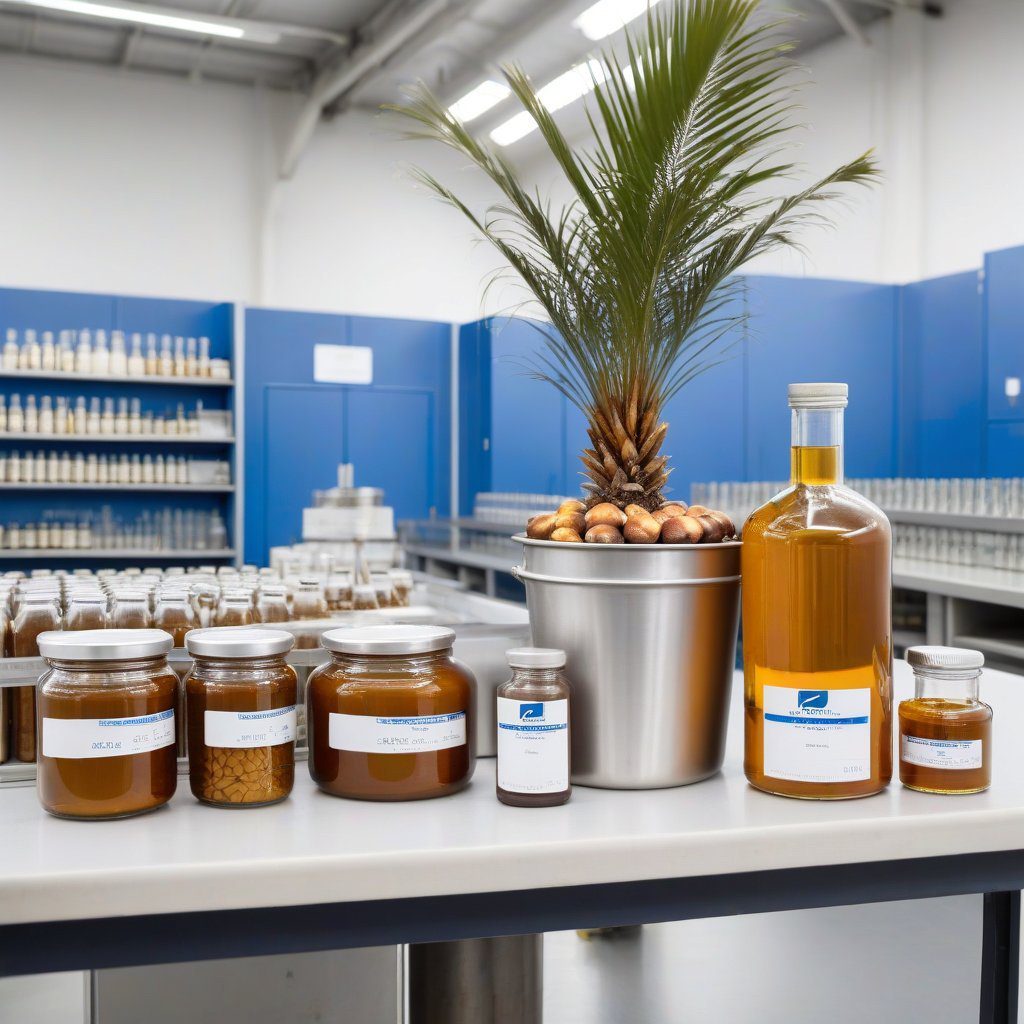
Quality audits in the palm kernel oil supply chain are more than compliance exercises; they are strategic muscle for risk reduction, supplier collaboration, and sustainable growth.
For two decades, Diplomata Comercial has partnered with producers, processors, and manufacturers across HPPC, pharma, and food/nutrition sectors, delivering reliable, scalable access to high-grade oleochemicals and palm-based products.
This guide presents a practical, human-centered framework to conduct rigorous audits that align with customer requirements, regulatory expectations, and international standards.
You’ll find actionable steps, field-tested checklists, and real-world considerations that translate into measurable improvements in quality, traceability, and supplier relationships.
The emphasis is on clarity, speed, and business impact—so your team can execute confidently, even in volatile markets.
As sustainability and certifications become non-negotiable in 2025, a disciplined audit program becomes a competitive differentiator, not a checkbox.
Let’s walk through a step-by-step, hands-on approach to quality audits that unlock real value in the palm kernel oil supply chain, while reinforcing your brand as a reliable global partner.
Step-by-Step Guide to Quality Audits in Palm Kernel Oil Supply Chain
The audit framework begins with a clear scope, a practical plan, and criteria that reflect both customer needs and industry standards.
This section outlines the audit objectives, the auditable elements, and how to structure a plan that surfaces risk early and guides decisive action.
Audit objectives set the target for what success looks like.
They should align with customer specifications, regulatory obligations, and internal risk appetite.
Start with a high-level scope that covers procurement, manufacturing, storage, and distribution.
Define which facilities, processes, and suppliers are in scope.
Clarify the expected outcomes, such as improved batch traceability or reduced non-conformances.
What constitutes a quality audit in this space
Audits in the palm kernel oil sector assess more than product quality.
They examine supplier governance, risk controls, documentation integrity, and traceability.
A robust audit evaluates both the presence of policies and their effective execution.
Key components include objective evidence, interviews with staff, and on-site observations.
The goal is to corroborate documented systems with day-to-day practice.
How to build an audit plan and timeline
Develop a checklist that mirrors the supply chain stages: supplier qualification, incoming material checks, processing parameters, storage conditions, and loading/transport.
Allocate time for document review, facility tour, and stakeholder interviews.
Build a risk-based schedule that prioritizes high-impact areas first, such as critical control points and certifications.
Keep the plan flexible enough to adapt to facility specifics, but structured enough to ensure consistency across audits.
A well-constructed plan reduces surprises and accelerates decision-making during the audit.
Phase 1: Risk Assessment and Supplier Qualification in Palm Kernel Oil Quality and Certifications
Risk assessment is the compass for your audit program.
This phase translates supplier attributes into measurable risk, enabling you to tier suppliers and allocate resources where they matter most.
It also covers the certification landscape that underpins palm kernel oil quality and certifications.
Defining risk categories helps separate strategic risks from routine deviations.
Consider product origin, supplier financial stability, processing capabilities, and breadth of certifications.
A tiered approach guides where to deepen audits and where to apply lighter touch inspections.
Risk categories should be translated into actionable actions: heightened surveillance for high-risk suppliers, standard checks for medium risk, and automated monitoring for low risk partners.
Defining risk criteria and supplier tiers
Tiering is not about labeling partners as good or bad; it’s about calibrating your audit intensity.
For example, Tier 1 might include key palm kernel oil suppliers with multiple certifications and complex supply chains.
Tier 2 could cover secondary suppliers with more straightforward processes.
Tier 3 could comprise distributors or brokers with limited oversight.
Document the criteria you use for each tier.
This creates transparency with suppliers and helps internal teams apply consistent standards across audits.
Certification landscape: RSPO, ISCC, ISO, and more
Certifications validate responsible sourcing, quality management, and product safety.
Familiarize your audit with major frameworks relevant to palm kernel oil, such as RSPO for sustainable palm sourcing, ISCC for sustainability and mass balance, and ISO-based QA systems for quality management.
Discuss with suppliers which certifications they hold, the scope of certification (facility, product line, or full company), and current audit cycles.
This knowledge directly informs risk assessments and corrective action planning.
Phase 2: On-Site Audit Protocols for Palm Kernel Oil Suppliers
On-site audits provide the most tangible evidence of how systems operate in practice.
This phase centers on preparation, field observations, and the ability to extract meaningful insights from interviews and process checks.
Preparation and logistics ensure you arrive with the right documents, including the latest COA, SDS, batch records, and supplier MOUs.
Confirm access to key areas and ensure sampling plans are aligned with customer needs.
Establish a clear interview strategy.
Prepare targeted questions for operations, quality, procurement, and warehouse teams to surface practical gaps and strengths.
A well-structured interview approach yields credible data and fosters cooperative engagement with the supplier.
Preparation checklists and field observations
Use a concise on-site checklist for the palm kernel oil facility that covers processing parameters, cleanliness, allergen controls where applicable, and equipment maintenance.
Observe batch processing, storage conditions, and sanitation practices.
Validate that procedures exist on paper and are followed in practice.
Document observations with time-stamped notes and attach photos where permitted.
This creates an reliable audit trail for both internal review and external verification.
Phase 3: Documentation, Traceability, and Compliance in the Palm Kernel Oil Supply Chain
Documented information and traceability are the backbone of quality assurance.
This phase emphasizes the reliability of data, the completeness of records, and the ability to trace every batch through the supply chain.
Documentation standards dictate that essential records are complete, legible, and retained for an appropriate period.
Look for batch records, COAs, material safety data sheets (MSDS), supplier qualification records, and change control logs.
Traceability systems must link raw materials to finished goods.
Confirm batch numbers, lot traceability, and the ability to identify affected lots quickly if a quality issue arises.
Documentation standards and data integrity
Consistency in documentation reduces confusion and accelerates investigations.
Ensure that documents are current, properly labeled, and aligned with contract specifications.
Data integrity is strengthened by version control, secure storage, and controlled access for authorized personnel.
Inadequate records can obscure root causes and delay corrective actions.
A robust documentation framework enables faster remediation and safer operations across the entire palm kernel oil supply chain.
Traceability and batch-level transparency
Traceability should be able to answer: where did the raw material come from, how was it processed, and where did it go in the chain of custody? Batch-level transparency allows you to isolate issues without disrupting the broader supply.
This capability is a powerful predictor of risk mitigation and product safety.
Invest in digital tools that support end-to-end traceability, such as batch-trace systems, digital COA repositories, and secure data sharing with partners.
The value is in the quick isolation of non-conforming lots and the ability to verify corrective actions across the network.
Phase 4: Corrective Action and Continuous Improvement in Palm Kernel Oil Operations
Audits reveal gaps; the real power lies in how you fix them and prevent recurrence.
Corrective action and continuous improvement (CAPA) turn findings into durable enhancements that protect quality and brand integrity.
Root cause analysis identifies why a deviation occurred, not just what happened.
Techniques such as “5 Whys” or fishbone diagrams help teams move beyond symptoms to sustainable solutions.
CAPA plans should be specific, time-bound, and tied to measurable indicators.
Track progress, verify effectiveness, and adjust as needed.
The ultimate objective is to demonstrate ongoing improvement and durable risk reduction.
Root cause analysis and CAPA
Develop CAPA actions that address both immediate containment and long-term prevention.
Immediate containment might involve segregating a non-conforming batch, while prevention involves changes to process parameters, supplier controls, or training programs.
Assign clear owners and deadlines for each CAPA item.
Document evidence of corrective actions and monitor effectiveness over subsequent audits and shipments.
Measuring effectiveness and sustained change
Effectiveness is proven through repeatable results in subsequent audits and ongoing supplier performance metrics.
Use leading indicators (such as reduced non-conformance rates, faster closure times, or improved supplier rating scores) to gauge progress.
Continuous improvement is not a one-off event.
Establish regular review cycles where audit outcomes inform supplier development plans, training curricula, and procurement strategies.
Strategic Partnerships and Reporting: From Audit Findings to Business Value
Audit results should translate into strategic value, not simply a compliance checklist.
This phase focuses on turning insights into dashboards, supplier development, and stronger risk management across the organization.
Leadership dashboards and KPIs translate complex audit data into a clear story for executives and stakeholders.
Key indicators might include non-conformance trend lines, CAPA closure rates, supplier acknowledgment times, and certification attainment progress.
Supplier development programs enable risk-sharing and capacity-building.
Joint improvement plans, training, and resource sharing help elevate supplier performance and foster long-term, mutually beneficial relationships.
Leadership dashboards and supplier development programs
Dashboards should be actionable, with color-coded risk signals and time-bound targets.
Use these visual tools to align cross-functional teams—procurement, QA, and operations—around common goals and timely decision-making.
Development programs are win-win.
Suppliers gain capabilities and stability; you gain more reliable supply and consistent quality.
Document progress, celebrate milestones, and adjust programs as markets evolve.
Next Steps to Partner with Diplomata Comercial for Palm Kernel Oil Quality
Choosing a trusted partner starts with aligning on values—quality, traceability, and global reach.
Diplomata Comercial brings >20 years of industry expertise, a proven track record of dependable supply, and end-to-end support from sourcing to export.
We weave a rigorous audit-informed approach into your sourcing strategy, ensuring palm kernel oil quality and certifications are consistently met while optimizing cost, speed, and risk management.
Our team collaborates with you to design tailored audit frameworks, provide ready-to-implement corrective actions, and support ongoing supplier development—so your operations remain resilient in dynamic markets.
To begin, engage with our regional or global teams for a diagnostic session.
We’ll help you map your current audit program, identify gaps, and outline a practical road map that accelerates qualification and assurance across your palm kernel oil supply chain.
Contact us to explore how Diplomata Comercial can elevate your quality program and strengthen your supplier ecosystem.
Partnering with Diplomata Comercial means access to a globally scalable, quality-first approach.
We enable quality assurance, robust traceability, and dependable supply continuity for customers seeking reliable palm kernel oil and oleochemicals.
Our emphasis on sustainability, compliance, and customer collaboration ensures you stay ahead in a competitive market.
Ready to take the next step? Reach out to discuss a customized audit program, sample checklists, and a pilot project designed around your most critical suppliers.
Let Diplomata Comercial help you translate audit insights into measurable improvements and lasting supplier partnerships.
Frequently Asked Questions
What is the purpose of conducting quality audits in the palm kernel oil supply chain?
Quality audits are strategic tools that help reduce risk, strengthen supplier collaboration, and enable sustainable growth across procurement, production, and distribution. They focus on process control, traceability, and corrective action systems rather than mere compliance. In short, audits translate requirements into measurable improvements.
How should I determine the scope of a palm kernel oil quality audit?
Begin with a high-level scope that covers procurement, manufacturing, storage, and distribution, and specify which facilities, processes, and suppliers are in scope. Define the expected outcomes, such as improved batch traceability or reduced non-conformances. A clear scope helps surface risks early and guides decisive action.
What objectives should guide a palm kernel oil audit to align with customer and regulatory demands?
Audit objectives should align with customer specifications, regulatory obligations, and the internal risk appetite. They should be measurable, clearly stated, and drive concrete actions. This alignment keeps audits relevant and impactful.
What key criteria or checklists belong in quality audits for palm kernel oil?
Include supplier qualification, COA verification, batch traceability, storage and handling controls, contamination prevention, process controls, and documentation accuracy. Use field-tested checklists that reflect customer requirements and industry standards. These criteria help you identify gaps quickly and prioritize fixes.
How do quality audits improve traceability across the palm kernel oil supply chain?
Audits enforce systematic data capture and end-to-end visibility for each batch, supplier, and process step. They help build reliable batch records and supplier performance data. With better traceability, recalls and corrective actions become faster and more precise.
Why is supplier collaboration important in quality audits for palm kernel oil?
Audits are most effective when suppliers engage in transparent communication and joint problem solving. Collaborative action plans, shared KPIs, and timely corrective actions reduce risk and lift overall quality. This partnership accelerates continuous improvement and resilience.
How do quality audits support sustainability and certifications in 2025?
A disciplined audit program aligns with growing sustainability expectations and certification schemes like RSPO and ISO, turning audits into a competitive differentiator. They ensure compliance across sustainability criteria, traceability, and ethical sourcing. Audits provide auditable proof of responsible practices.
What are best practices for executing quality audits quickly in volatile markets?
Define a tight scope and objectives, develop a practical audit plan, and focus on high-risk elements first. Leverage field-tested checklists and consider remote or modular audits to speed up delivery. Clear documentation and rapid follow-ups turn quick audits into lasting improvements.