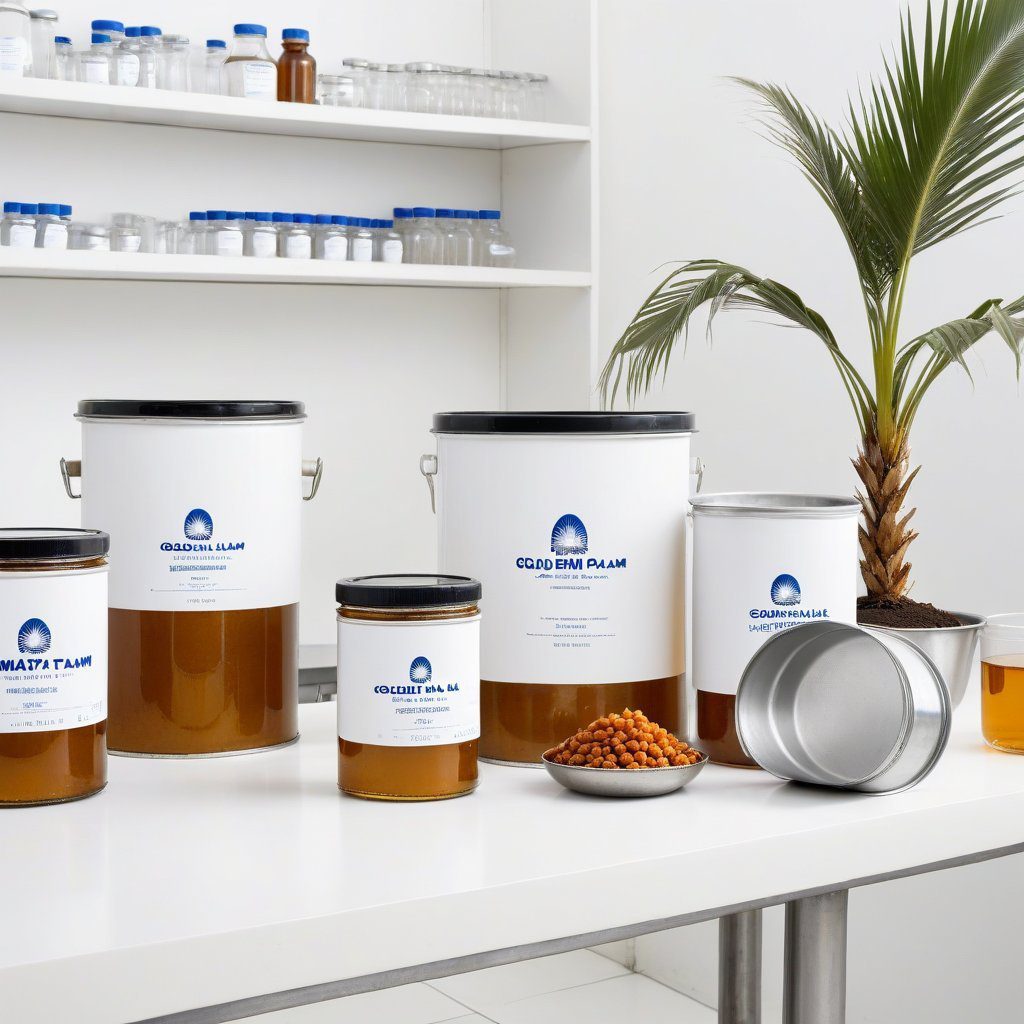
In a market where timing, reliability, and cost control define competitiveness, Brazilian buyers seeking palm kernel oil rely on partners who can bridge global sourcing with local execution.
Diplomata Comercial stands out as a trusted supplier and distributor of oleochemicals and related inputs, backed by two decades of industry presence and a track record of robust, scalable operations.
This guide focuses on the essential factors that influence delivery times, commercial terms, and costs when sourcing palm kernel oil in Brazil, helping procurement teams evaluate options, minimize risk, and lock in favorable arrangements.
Across the Brazilian landscape, from coastal export hubs to inland manufacturing corridors, the dynamics of supply, logistics, and compliance are intertwined.
By sharing practical insights and real-world considerations, we aim to empower you to optimize your palm kernel oil supply strategy with confidence.
The focus is on durable value: stable supply, transparent pricing, efficient logistics, and a partner who can scale with your business needs.
In short, this guide connects strategic decision-making with actionable steps that lead to measurable results in 2025 and beyond.
Palm Kernel Oil Suppliers in Brazil: An Overview of Delivery Times and Commercial Terms
Delivery times and commercial terms are the first cross-cutting levers that affect cash flow and production planning.
For palm kernel oil, Brazilians buyers contend with port throughput, inland transportation, and the availability of containerized shipments from overseas suppliers.
The objective is to align expectations with a supplier who can offer consistent lead times, clear incoterms, and flexible payment options without compromising on quality.
Diplomata Comercial emphasizes transparent scheduling, proactive communication, and end-to-end coordination to minimize disruptions and keep projects on track.
This section breaks down typical timelines and the commercial terms most commonly used in Brazil’s palm kernel oil market, along with practical tips to manage exceptions and volatility in global markets.
Typical Delivery Timelines by Brazilian Port and Route
Delivery timelines are driven by origin, transport mode, and the chosen port of entry.
When shipments originate from major oilseed regions, sea freight tends to be the primary channel, with para- or peri-continental routing through Santos, Paranaguá, Itajaí, or Rio de Janeiro.
For inland manufacturing hubs, containerized transport from these ports to warehouses or production sites adds a further leg to the journey.
In practice, you should plan for:.
- Ocean transit times from primary export hubs to Brazilian ports, typically ranging from 20 to 40 days depending on vessel schedule and routing.
- Port handling and berth availability, which can introduce 3–7 days of variability in peak seasons.
- Transshipment, if applicable, along with customs clearance timelines that commonly range from 3–10 days for standard consignments with complete documentation.
- Inland trucking and rail legs, which may add another 2–7 days depending on distance, road conditions, and peak-period congestion.
In our experience, the most reliable way to reduce variability is to align with a partner who maintains constant communications, understands the nuances of Brazilian port operations, and uses standardized scheduling cadences.
A delivery timeline discipline—supported by real-time tracking, buffer planning, and contingency options—helps maintain production continuity even when external factors shift.
Commercial Terms You Should Expect
Commercial terms shape cash flow, risk allocation, and responsibility across the supply chain.
The most common incoterms for palm kernel oil imports to Brazil are FOB (free on board), CFR (cost and freight), CIF (cost, insurance, and freight), and sometimes DDP (delivery duty paid) for select customers who want a turnkey solution.
Practical considerations include:.
- Delivery terms that delineate who bears risk at each stage of transit—particularly from the port to your warehouse or facility.
- Pricing structures that separate base price, freight, insurance, and handling charges, enabling clearer internal budgeting.
- Payment terms that balance supplier risk with buyer cash flow—often net 30, net 45, or more favorable terms negotiated on a larger or longer-term contract basis.
- Quality acceptance criteria and tolerance levels integrated into the contracting framework to avoid post-delivery disputes.
At Diplomata Comercial, the emphasis is on transparent pricing and terms that support your procurement cycle.
We bring clarity around responsibilities, timelines, and documentation, reducing negotiation frictions and accelerating onboarding for new SKUs or new supply routes.
This approach, combined with our global sourcing capabilities, helps our clients maintain a steady palm kernel oil supply in the face of market fluctuations.
Cost Structure for Palm Kernel Oil in Brazil: Pricing, Incoterms, and Taxes
Understanding cost components is essential to building a resilient procurement strategy.
Palm kernel oil pricing is influenced by feedstock costs, processing, packaging, and the logistics chain.
In Brazil, import duties, value-added taxes, and port handling charges can significantly affect landed cost.
A disciplined approach to cost management—covering incoterms, freight, insurance, storage, and internal handling—enables more accurate budgeting and better negotiation leverage with suppliers.
Diplomata Comercial brings structured cost visibility and negotiation leverage to clients who need predictable spend without sacrificing quality or service levels.
Incoterms and Their Impact on Cash Flow
Incoterms define who pays for freight, insurance, import duties, and who bears risk at each stage of transit.
For palm kernel oil, the two most commonly used terms in Brazil are FOB and CIF, with CFR as a practical middle-ground for many buyers.
The choice affects your cash flow in several ways:.
- FOB shifts most freight-related costs to the buyer after the goods pass the ship’s rail, requiring strong import logistics management on the buyer side.
- CIF bundles freight and insurance into the price paid to the seller, providing more cost predictability but requiring careful evaluation of insurance coverage and carrier reliability.
- Incoterms influence required capital reserves for duties, taxes, and brokerage fees at the port of entry, impacting working capital planning.
Our approach is to tailor terms to your project profile.
If you operate with tight production windows, CIF terms with robust insurance coverage and clearly defined freight benchmarks can reduce administration and risk.
For buyers who have mature logistics capabilities or develop internal cargo consolidation, FOB with a negotiated freight contract may yield lower total landed cost.
Tariffs, Taxes, and Import Logistics
landed cost calculations must account for import duties, PIS/COFINS, ICMS, and potential state-specific taxes.
The exact rate depends on the product classification, origin, and current regulatory framework, which can shift with policy changes.
In addition, port handling, storage, and demurrage charges can accumulate when documentation is incomplete or inspections are delayed.
A decisive factor is the supplier’s ability to provide complete compliance documentation, accurate certificates of analysis, and traceability records, reducing the risk of customs delays and penalties.
Diplomata Comercial emphasizes proactive compliance readiness.
Our team coordinates with customs brokers, ensures the accuracy of commercial invoices and certificates, and maintains a compliant documentation packet that aligns with Brazilian regulations and international standards.
This focus reduces the likelihood of costly delays and helps you achieve a faster time-to-market for your palm kernel oil procurement.
Hidden Costs: Handling, Storage, and Quality Adjustments
Beyond the base price and freight, several cost levers can surprise the unwary buyer.
Consider:.
- Handling fees at the port and warehouse, which can vary with container size, stacking, and packaging type (bulk vs. packaged).
- Storage costs if inventory must be staged in a Brazilian facility before processing, particularly during peak demand or supply shortfalls.
- Quality-based adjustments, including re-testing costs if there are minor deviations in specifications upon arrival.
By negotiating inclusive terms or volume-based storage arrangements, you can stabilize these variables.
Diplomata Comercial routinely collaborates with clients to structure pricing that accounts for these factors, delivering predictable landed costs and fewer surprises at the dock.
Logistics Excellence: How to Plan Palm Kernel Oil Supply in a Volatile Market
Supply chain volatility—ranging from currency fluctuations and freight rate shifts to port congestion and weather events—demands a proactive planning mindset.
The most resilient palm kernel oil programs combine accurate demand forecasting, agile logistics, and robust supplier relationships.
Diplomata Comercial uses integrated planning approaches to align procurement with production schedules, enabling steady output even when external conditions change.
The result is a more efficient, predictable palm kernel oil supply chain that helps you meet customer commitments and protect margins.
Forecasting Demand and Lead Times
Effective forecasting begins with transparent data on your upcoming projects, seasonal production cycles, and safety stock targets.
A disciplined forecast supports better supplier alignment and reduces the risk of stockouts or overstocking.
Key practices include:.
- Collaborative forecasting with suppliers and logistics partners to refine ordering quantities and timing.
- Scenario planning that models best-case, likely, and worst-case demand with corresponding replenishment triggers.
- Regular review cycles to adjust forecasts in response to market signals, regulatory changes, or new customer requirements.
With a steady palm kernel oil supply, you can maintain consistent production schedules, minimize changeovers, and protect your service levels for end customers.
Transportation Modes and Routing Optimization
Transportation choices influence both cost and reliability.
While sea freight remains dominant for long-haul sourcing, road and rail segments determine the last-mile performance.
Practical optimization steps include:.
- Consolidating multiple smaller orders into fewer, larger shipments to maximize vessel utilization and reduce per-ton freight costs.
- Using cross-docking and regional distribution hubs to shorten final delivery times and reduce handling steps.
- Monitoring carrier performance, including on-time delivery (OTD) metrics, to inform future routing decisions.
Our logistics philosophy centers on reducing friction and increasing predictability.
By maintaining strong carrier partnerships and a flexible routing playbook, we help you achieve reliable delivery timelines that support your production plans.
Customs and Compliance Readiness
Customs clearance is a recurring bottleneck for imports.
Early preparation of documentation, accurate product classification, and pre-approval where possible can dramatically shorten clearance times.
Recommended practices include:.
- Securing certificates of analysis, material safety data sheets, and origin certificates well in advance of shipment.
- Maintaining a clean import file with consistent labeling, batch numbers, and traceability records for each consignment.
- Coordinating with experienced brokers who understand Brazilian regulatory updates and common inspection points.
Diplomata Comercial supports customers with pre-cleared documentation packages and direct collaboration with trusted brokers to expedite customs without compromising compliance.
Quality, Compliance, and Sustainability: Verifying a Palm Kernel Oil Supplier
Quality assurance and regulatory compliance are non-negotiable when selecting a palm kernel oil supplier.
Buyers seek partners who can demonstrate consistent product quality, robust traceability, and responsible sourcing.
This section outlines practical criteria and the kind of evidence you should request.
Diplomata Comercial embodies the ethos of EEAT by aligning technical capability with global reach and local execution.
Certificates, QA, and Traceability
Traceability is essential for palm kernel oil to ensure safety, quality, and provenance.
Expect suppliers to provide:.
- Certificate of Analysis (CoA) for each batch, including fatty acid composition, moisture, contaminants, and iodine value.
- Quality management system certification (e.g., ISO 9001) and GMP-compliant production processes for consistency.
- Full batch traceability from origin to delivery, with lot numbers and transparent records across the supply chain.
Proof of ongoing QA audits, third-party testing, and transparent reporting strengthens supplier credibility and reduces risk for your operations.
Sustainability and ESG Considerations
As procurement teams increasingly prioritize sustainability, you should look for evidence of responsible sourcing and environmental stewardship.
Key indicators include:.
- Clear policies on supply chain due diligence, including supplier screening for environmental and social criteria.
- Traceable origins and certified sustainable practices that minimize ecological impact and protect local communities.
- Transparent reporting on emissions, waste management, and compliance with applicable environmental regulations.
Diplomata Comercial integrates sustainability into our sourcing approach, aligning with global standards while ensuring practical applicability for Brazilian operations.
This alignment helps clients meet both regulatory expectations and corporate responsibility goals.
Diplomata Comercial: A Practical Case for Palm Kernel Oil Supply in Brazil
With a 20-year track record in manufacturing, importing, exporting, and distributing chemicals and oleochemicals, Diplomata Comercial brings a unique blend of technical rigor and global reach.
Our experience spans HPPC, pharma, industrial chemistry, food ingredients, and animal nutrition.
We do not simply supply palm kernel oil; we partner to design solutions that reduce risk, improve efficiency, and elevate the competitiveness of our clients.
By combining a strong technical backbone with a hands-on logistics program, we deliver end-to-end value in the palm kernel oil supply chain.
A 20-Year Track Record in Chemicals and Oleochemicals
Experience matters when building a resilient supply relationship.
Over two decades, Diplomata Comercial has refined a scalable model for sourcing, quality control, and international trade.
Our approach emphasizes:.
- Deep knowledge of global markets and regulatory landscapes to shield clients from volatility and compliance risk.
- Structured supplier relationships that emphasize reliability, continuity, and scalable capacity.
- Tailored solutions for Brazilian buyers, balancing cost, quality, and service with regional delivery requirements.
Clients benefit from a partner who understands both the science of oleochemicals and the realities of Brazilian logistics, enabling smoother onboarding and faster time-to-value for palm kernel oil projects.
Global Sourcing and Local Brazilian Logistics
Our strength lies in connecting global supply with local execution.
We leverage international sourcing networks to access high-quality palm kernel oil while integrating with Brazilian port operations, warehousing, and distribution networks.
This hybrid model provides:.
- Stable supply availability, even during market turmoil or supply chain disruptions.
- Clear, auditable documentation and compliance support tailored to Brazilian import requirements.
- Responsive service levels, from initial quotation through post-delivery support and after-sales assistance.
In practice, this means you can expect a partner who can negotiate favorable terms with producers, ensure product integrity, and deliver at scale with consistent lead times, enabling you to plan production with confidence.
7 Practical Steps to Compare Palm Kernel Oil Suppliers
To make an informed decision, use a structured evaluation framework that emphasizes not only price but also reliability, service, and risk management.
Here are seven steps that help you compare palm kernel oil suppliers effectively:.
- Define your critical success factors, including delivery timelines, cost predictability, and quality certifications.
- Request a detailed landed cost analysis under several incoterms to understand cash flow implications.
- Ask for batch-specific CoAs and traceability documentation to verify product integrity and origin.
- Evaluate supplier capabilities for risk mitigation, such as backup suppliers, buffer stock, and contingency plans.
- Assess logistics capabilities, including port proximity, warehousing options, and last-mile delivery reliability.
- Review sustainability credentials and supplier ESG commitments to align with your corporate policy.
- Pilot the relationship with a small, controlled order to test procurement cycles, response times, and service quality before scaling.
By applying these steps, you can identify a palm kernel oil supplier that consistently meets your performance targets while maintaining flexibility to adapt to market dynamics.
Next Steps: Getting Started with a Trusted Palm Kernel Oil Partner
The path to a resilient palm kernel oil supply in Brazil starts with selecting a partner who combines global capability with local execution.
Diplomata Comercial offers:.
- Proven experience in sourcing, importing, and distributing palm kernel oil and related oleochemicals for B2B customers.
- Transparent pricing, flexible incoterms, and proactive logistics management to minimize lead times and costs.
- Rigorous quality assurance, traceability, and regulatory compliance support to safeguard your production and brand.
If you are evaluating suppliers for palm kernel oil supply in Brazil, consider initiating a discovery phase with Diplomata Comercial.
We can align on your target delivery timelines, review your preferred incoterms, and present a tailored cost and service proposal designed to optimize your operations and protect margins.
Contact us to explore how a strategic partnership can translate into reliable supply, predictable costs, and measurable business outcomes.
In the end, the choice of a palm kernel oil supplier is a decision about risk, reliability, and relationship.
With a partner that combines technical proficiency with global reach and a commitment to client success, you gain more than a product—you gain a dependable supply chain that scales with your business ambitions.
Frequently Asked Questions
What factors influence delivery times for palm kernel oil shipments to Brazil?
Delivery times are shaped by port throughput, vessel schedules, container availability, inland transportation distance, and seasonal demand. A supplier that provides transparent scheduling and proactive updates helps set realistic expectations and reduces disruptions. In Brazil, end-to-end coordination is key to aligning production planning with actual lead times.
Which incoterms are most common for palm kernel oil in Brazil, and how do they impact cost and responsibility?
Common incoterms for palm kernel oil include FOB, CIF, and DAP, which determine who pays for freight and insurance and when risk transfers. Understanding these terms helps align logistics with your procurement capabilities and cash flow. Choose terms that match your in-house logistics or 3PL strengths.
How can Brazilian buyers negotiate favorable commercial terms with palm kernel oil suppliers?
To secure favorable terms, negotiate price stability through longer contracts or forecasted volumes and request flexible payment options. Look for transparent pricing on freight, container charges, and handling to avoid hidden costs. Align terms with your procurement calendar and supply chain capabilities.
What costs should be considered beyond the base price when sourcing palm kernel oil in Brazil?
Beyond the base price, factor freight, insurance, port fees, inland transport, storage, duties and taxes, and potential inspection charges. Currency exposure and seasonal price swings can also impact landed cost. Build total cost transparency into contracts to manage cash flow effectively.
How does Diplomata Comercial ensure delivery reliability and end-to-end coordination for palm kernel oil?
Diplomata Comercial emphasizes transparent scheduling, proactive communication, and scalable operations, backed by two decades of industry presence. This approach minimizes disruptions in the palm kernel oil supply chain from overseas sourcing to local delivery. The result is more reliable timelines and easier cost control.
What data should buyers review to evaluate lead times and set expectations with palm kernel oil suppliers in Brazil?
Review historical lead times, stated service levels, port throughput data, and the supplier’s contingency plans. Request regular status updates and a documented risk mitigation process. This data helps you set realistic expectations and reduce project risk.
What risk factors are essential to assess when sourcing palm kernel oil in Brazil?
Key risks include port congestion, supplier concentration, currency volatility, regulatory changes, and quality deviations. Mitigate by diversifying suppliers, securing robust contracts, and requiring clear quality specifications and inspection rights.
What practical steps can procurement teams take to optimize palm kernel oil sourcing in 2025 and beyond?
Build a sourcing playbook that maps port-to-plant routes, qualification standards, and transparent pricing models. Monitor market trends, diversify suppliers, and negotiate long-term terms with renewal options to stay competitive.