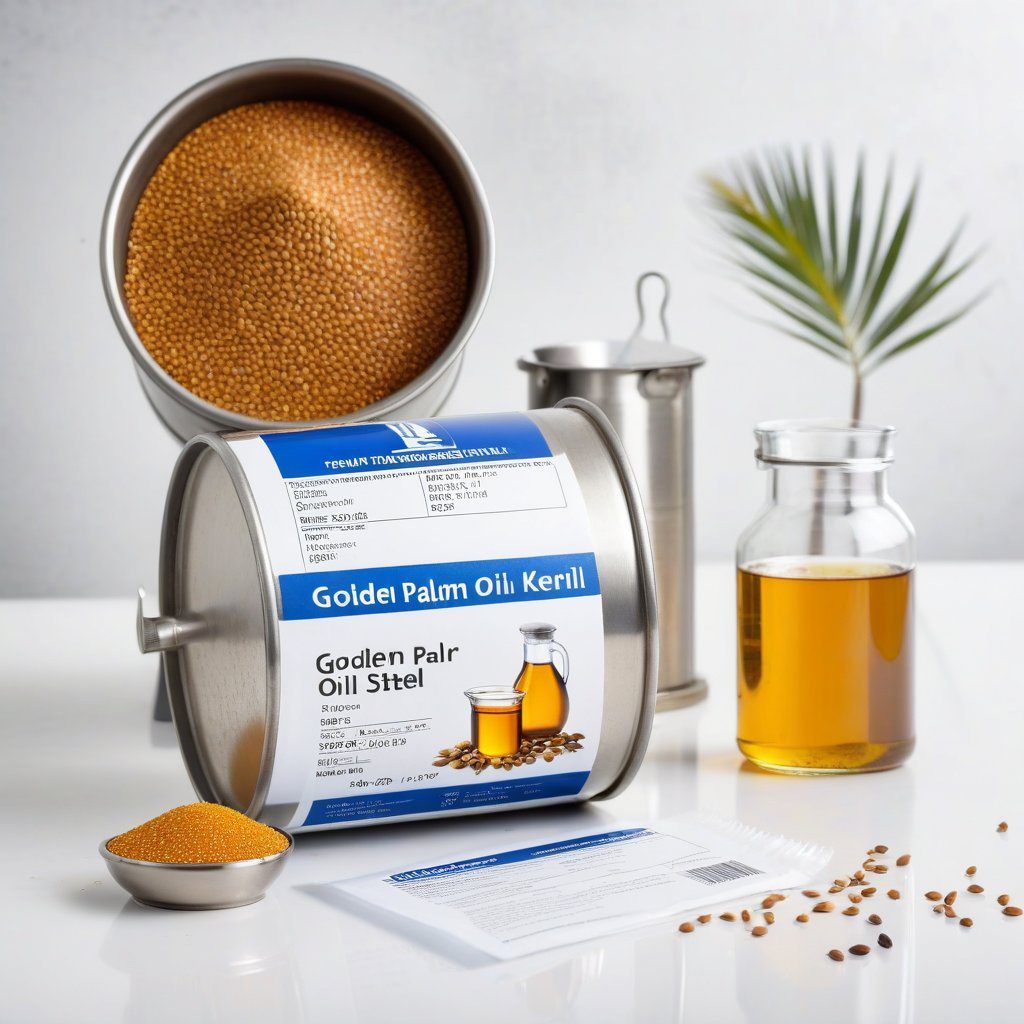
This guide focuses on Palm kernel oil quality and how to assess it effectively.
For manufacturers and processors, the stakes are high: variability in PKO can ripple through formulations, product performance, and regulatory compliance.
This practical guide walks you through measurable indicators, testing plans, and decision-making frameworks that lead to dependable outcomes.
With more than two decades of experience, Diplomata Comercial has built a reputation as a trusted supplier and partner for industries ranging from HPPC to pharmaceutical ingredients and animal nutrition.
Our approach blends technical rigor with a clear path to procurement excellence: robust quality control, rigorous traceability, and a risk management mindset that keeps your supply stable, even in volatile markets.
You’ll see how to translate lab results into real-world actions: supplier qualification, batch-to-batch consistency, and practical acceptance criteria that keep your operations moving forward.
Key Indicators of Palm Kernel Oil Quality: Core Metrics and Why They Matter
Essential Physicochemical Properties to Monitor
Physicochemical properties provide the first line of insight into PKO quality.
Tracking these metrics helps you separate a consistent, dependable supply from a batch that could complicate production.
In practice, expect to review acid value and free fatty acids levels as primary indicators of hydrolysis and freshness.
These parameters influence downstream performance in formulations and stability during storage.
Another critical set of properties includes peroxide value and iodine value, which reflect oxidation and degree of unsaturation, respectively.
Together they inform you about oxidative stability and the suitability of PKO for your process.
Add refractive index, specific gravity, and color grading to build a quick, at-a-glance view of lot consistency.
Finally, monitor moisture content and volatile matter because even small amounts of water or volatiles can drive microbial growth or accelerate degradation in storage and transport.
In daily practice, you’ll interpret these properties against defined acceptance criteria aligned with your end-use.
For example, a shift in acid value or moisture content can signal improper storage or compromised handling, prompting a hold or root-cause check before proceeding.
This approach emphasizes risk management and proactive quality control, not reactive firefighting.
Contaminants and Impurities to Screen For
Beyond the core physico-chemical metrics, you should screen PKO for impurities and contaminants that can affect performance or regulatory compliance.
Common focal areas include residual moisture and entrained impurities, waxes or precipitates indicating crystallization tendencies, and oxidized products that contribute to off-odors or poor stability.
It’s also prudent to consider trace metals and pesticide residues only if your supply chain or regulatory environment requires it.
Establish clear screening thresholds based on your product specification and applicable standards.
If a batch shows elevated impurities, employ a structured root-cause analysis rooted in your supplier qualification and storage conditions.
Documented investigations help maintain confidence with customers and regulators while guiding corrective actions with suppliers.
Developing a Practical Testing Plan for Palm Kernel Oil Quality
In-House vs. Third-Party Testing: A Practical Decision Framework
Deciding between in-house testing and outsourcing to a certified lab hinges on your organization’s capabilities, volume, and QA maturity.
In-house testing offers speed and control over routine checks such as color, odor, and basic physico-chemical screenings.
Third-party laboratories provide access to advanced instrumentation (GC/MS, detailed fatty acid profiling, comprehensive purity analyses) and independent verification that strengthens credibility with customers and auditors.
For many organizations, a hybrid approach works best: routine in-house screening combined with periodic third-party analytics for full characterization and verification.
This hybrid model supports traceability, maintains consistent supplier performance, and sustains quality assurance across campaigns and seasons.
Sampling Strategies That Drive Reliable Results
Accurate assessment begins with representative sampling.
Adopt a formal sampling plan that specifies the number of samples per batch, the sampling points (e.g., refinery outlet, storage tank, and transport container), and the frequency of tests.
Effective sampling reduces variability and improves decision confidence.
Maintain meticulous records of batch numbers, dates, and chain-of-custody to strengthen your QA narrative.
Practical tips include composite sampling from multiple locations for larger shipments, avoiding sampling from damaged containers, and aligning sampling with your forward production schedule to prevent bottlenecks.
Clear sampling protocols are essential for batch traceability and for making informed procurement decisions with suppliers like Diplomata Comercial, whose global reach supports consistent supply across regions.
Documentation and Record-Keeping for Audit Trails
Documentation is the backbone of compliance and buyer confidence.
Create standardized data sheets that capture all critical test results, reference standards, instrument calibration status, and operator notes.
Regular internal audits of records help ensure completeness and accuracy, supporting a robust quality assurance program.
An audit trail that links test results to specific lots, purchase orders, and storage conditions is invaluable during supplier assessments and customer inquiries.
Laboratory Analysis Essentials: Physical, Chemical, and Sensory Tests
Physical Tests: Color, Odor, Clarity, and Viscosity
Physical attributes offer immediate indicators of PKO suitability for a given application.
Color grading should be aligned with industry standards or customer specifications, using a standardized method to ensure comparability across lots.
Odor assessment, while subjective, can reveal oxidative degradation or contamination when performed by trained personnel under consistent conditions.
Clarity and turbidity inform you about crystallization tendencies or the presence of suspended solids, while viscosity can reflect molecular weight distribution and processing characteristics.
Short, structured notes from experienced analysts add value to the results and help translate measurements into actionable decisions for production teams.
Chemical Tests: Free Fatty Acids, Peroxide Value, and Saponification
Chemical analyses provide essential insights into PKO stability and quality.
Regular measurements of free fatty acids and acid value indicate hydrolytic breakdown, which can compromise shelf life and process performance. Peroxide value testing reveals oxidative reactions that may have begun even before the oil reached your facility.
Low PV is generally associated with fresher, more stable oil, while rising PV can be a signal to review storage conditions or supplier handling practices.
The saponification value gives an estimate of the average molecular weight of fatty acids and informs formulation behavior in industrial applications.
When combined with fatty acid profiling, SV helps you understand the fat’s triglyceride distribution, which influences performance in lubricants, oleochemicals, and other products.
Sensory Evaluation and Stability Assessments
Sensory evaluation remains a practical complement to instrumental data.
Trained sensory panels can detect subtle aroma shifts, off-notes, or texture changes that precede measurable degradation.
Stability assessments, including accelerated aging tests, help predict shelf life under your storage and transport conditions.
These assessments support confidence in long-term performance and can be critical for customers with tight regulatory or quality requirements.
Interpreting Results: Making Decisions Without Overreacting
Setting Acceptance Criteria and Tolerances
Define clear acceptance criteria that reflect your end-use, regulatory environment, and supplier capabilities.
Criteria should cover critical parameters (FFA, PV, moisture, color) and more routine checks (temperature control, packaging integrity).
Establish tolerances that balance quality with supply continuity.
Communicate criteria transparently with suppliers, especially when engaging with a partner like Diplomata Comercial who brings global standards and practical experience to the table.
Root-Cause Analysis for Out-of-Spec Batches
When results fall outside the defined range, implement a structured root-cause analysis.
Trace the issue through the supply chain: raw material suppliers, processing steps, storage conditions, and transport.
Document findings and actions, whether it’s adjusting storage temperature, refining handling procedures, or requalifying a supplier.
A systematic approach reduces reoccurrence risk and supports continuous improvement across the procurement cycle.
When to Hold, Rework, or Discontinue
Decide on a decision ladder that considers potential impact on downstream products, customer commitments, and regulatory obligations.
If results suggest a marginal deviation with minimal risk to performance, a hold followed by confirmatory testing may suffice.
For more pronounced deviations, discontinue use and initiate supplier communication or product replacement.
A disciplined process protects your brand’s integrity and preserves production schedules.
Supply Chain and Quality Assurance: Ensuring Consistency Across Batches
Supplier Qualification and Documentation
Strong supplier qualification goes beyond price and availability.
It encompasses documentation, process controls, and a demonstrated history of consistent performance.
Establish a formal onboarding process that includes facility audits, quality management system reviews, and sample testing from initial orders.
A partner with a proven track record, like Diplomata Comercial, can provide assurance through robust supplier qualification programs and global sourcing capabilities.
Batch Traceability and Lot Control
Traceability is not optional in today’s regulated and performance-driven environment.
Implement lot-level traceability that links every test result to a specific batch, PO, and shipment.
This visibility is critical when investigating quality anomalies, supporting product recalls if necessary, and maintaining customer trust across markets.
Storage, Handling, and Transportation Impacts on Quality
Your QA plan should address how PKO is stored, handled, and transported.
Exposure to heat, light, and humidity can accelerate oxidation and hydrolysis.
Use protective packaging, controlled storage conditions, and validated transport practices to minimize quality drift.
Collaborate with your logistics partners and suppliers to align practices with the tight requirements of palm kernel oil quality management.
Choosing a Partner: How Diplomata Comercial Elevates Palm Kernel Oil Quality for Industry
Why Experience Matters
Experience translates into practical guidance, not just theory.
Diplomata Comercial brings more than 20 years of industry presence, including deep involvement with HPPC, pharma, and industrial oleochemicals.
In daily operations, that experience translates into proactive risk mitigation, rapid issue resolution, and a deep understanding of how PKO behaves across different processes and applications.
The result is a partner that consistently delivers reliable, scalable solutions for complex supply chains.
Global Reach and Practical Logistics
Global sourcing capabilities combined with regional logistics mastery provide a distinct advantage.
You gain access to a broad network of suppliers while benefiting from consistent service across markets.
This global reach ensures you can maintain steady PKO supply, even when regional conditions disrupt other channels.
The practical logistics approach minimizes lead times, reduces disruptions, and strengthens your procurement strategy.
Integrated Quality Assurance and Customer Support
Diplomata Comercial integrates QA programs with hands-on support.
You’ll work with specialists who understand your sector—whether you’re producing oleochemical intermediates, lubricants, or industrial cleaners.
The combined focus on quality assurance, traceability, and customer service helps you meet regulatory expectations and achieve operational targets with confidence.
When issues arise, you’ll receive targeted guidance to restore performance quickly and maintain production continuity.
Practical Stepwise Implementation: Start Here to Improve PKO Quality in 90 Days
To translate these insights into action, consider a phased plan that aligns with your current QA maturity.
Begin by codifying your PKO quality specification, including essential metrics like FFA, PV, moisture, color, and odor.
Next, implement a formal sampling plan and establish a clear acceptance threshold for each parameter.
Then, pair in-house testing with periodic third-party verification for comprehensive validation.
Finally, strengthen supplier qualification and batch traceability to sustain long-term consistency.
By engaging with a partner like Diplomata Comercial, you can tap into a global network, rigorous QA practices, and practical logistics that reduce risk and improve outcomes across your supply chain.
Próximos Passos Estratégicos
Ready to elevate your palm kernel oil quality program? Start by assessing your current PKO QA workflow, identifying gaps in sampling, testing, and supplier management.
Consider a collaborative engagement with Diplomata Comercial to tailor a robust quality assurance program that aligns with your production needs and market requirements.
Our team brings deep expertise in palm kernel oil, strong global sourcing capabilities, and a proven track record of helping companies maintain steady, compliant supply chains.
Contact us to explore how we can strengthen your PKO quality, reduce variability, and enhance your competitive edge in the marketplace.
Frequently Asked Questions
What are the key indicators of palm kernel oil quality?
Palm kernel oil quality hinges on several core metrics, including acid value, free fatty acids, peroxide value, iodine value, refractive index, specific gravity, color grading, moisture content, and volatile matter. Together, these indicators reveal hydrolysis, oxidation, unsaturation, viscosity, and storage stability that impact formulations and performance.
How do acid value and free fatty acids relate to PKO freshness?
Acid value and free fatty acids signal hydrolysis and oil degradation, which can compromise stability and formulation accuracy. Elevated levels often indicate older or improperly stored PKO, guiding acceptance decisions and future storage practices.
Why are peroxide value and iodine value important in palm kernel oil quality assessments?
Peroxide value reflects oxidation status, helping identify rancidity risk, while iodine value indicates the degree of unsaturation and process suitability. Together, they inform oxidative stability and compatibility with your manufacturing processes.
What role do refractive index and specific gravity play in PKO quality checks?
Refractive index and specific gravity offer quick, at-a-glance checks of lot consistency and potential adulteration. Deviations trigger deeper analysis to ensure the PKO meets the expected quality profile.
How should moisture content and volatile matter be monitored for PKO quality?
Moisture and volatile content influence microbial growth and storage stability. Monitoring these parameters helps prevent quality drift and supports reliable shelf life and performance.
How should lab results inform supplier qualification and procurement decisions for PKO quality?
Lab data support supplier qualification, assess batch-to-batch consistency, and shape practical acceptance criteria. Use results to decide on continued sourcing, adjustments, or supplier escalation.
What is the importance of traceability and robust quality control for PKO across batches?
Traceability ensures regulatory compliance, traceable recalls, and consistent product performance. A strong quality control framework links test results to specific lots and sourcing history.
How can palm kernel oil quality impact product performance across industries?
PKO quality affects formulations in HPPC, pharmaceutical ingredients, and animal nutrition, influencing stability, shelf life, and regulatory outcomes. Maintaining consistent PKO quality minimizes process disruptions and performance variability.